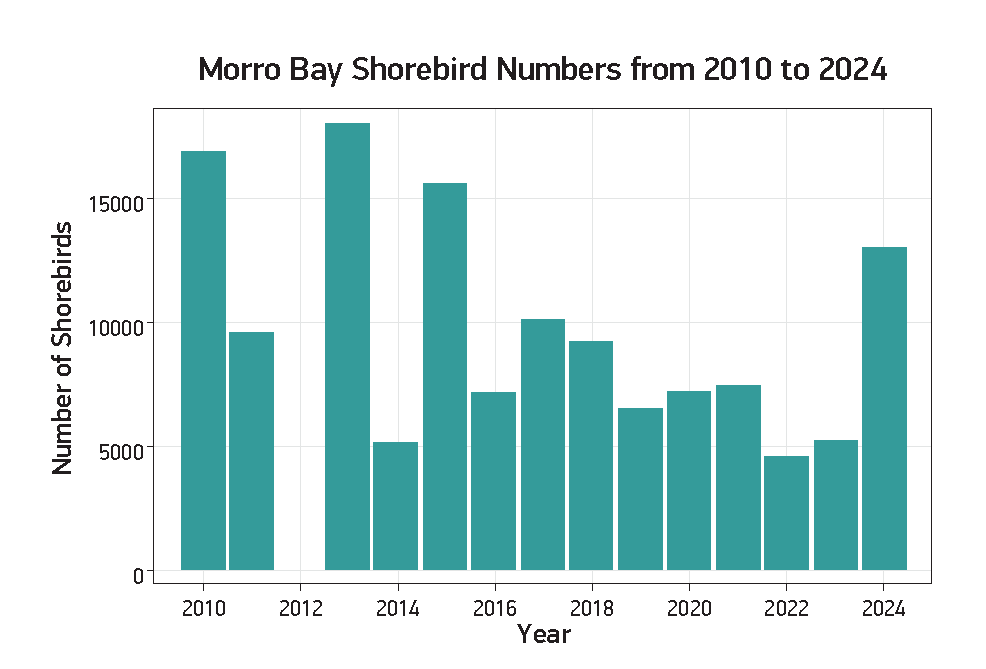
Snowy Plover Populations on the Morro Bay Sandspit
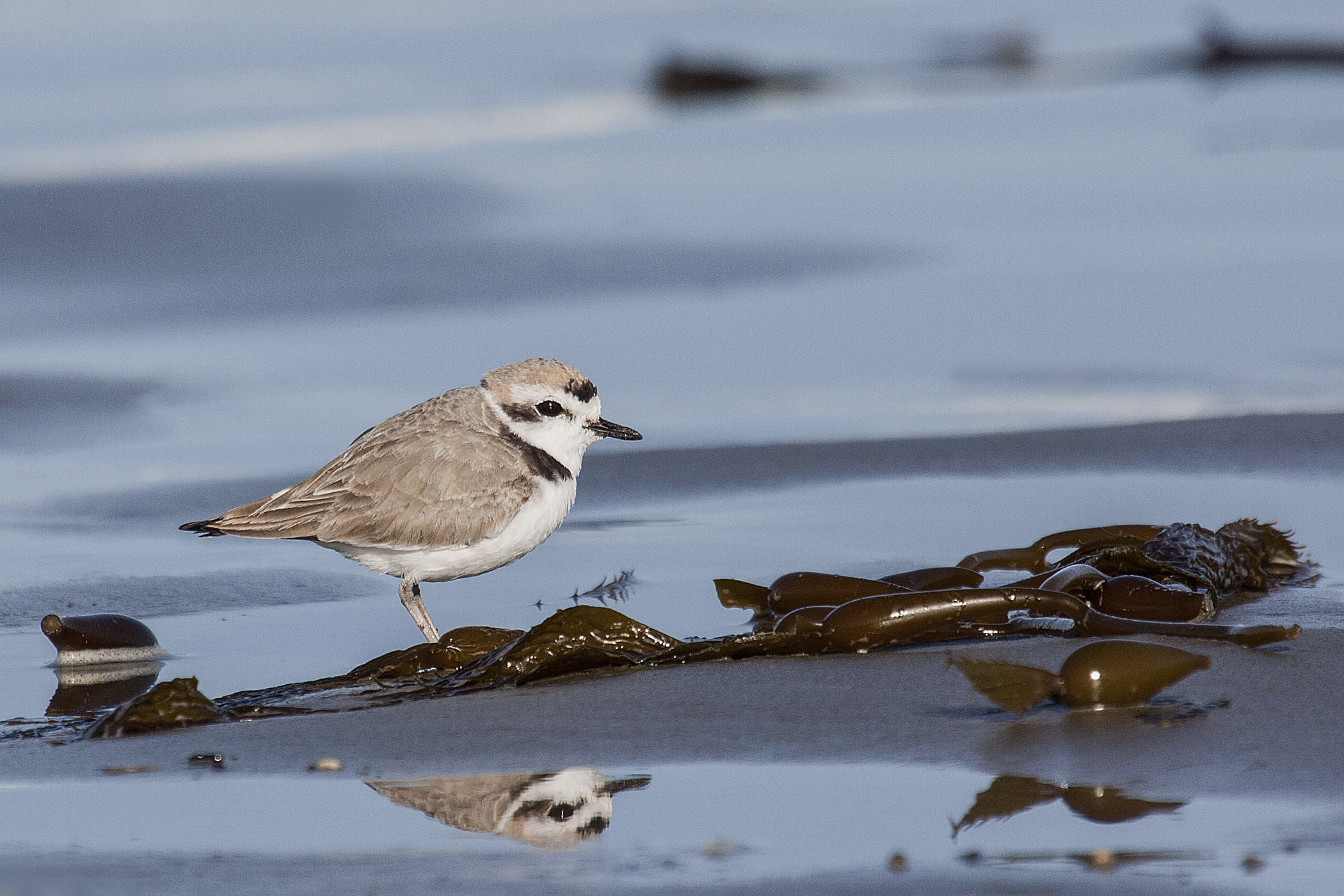
The western snowy plover is a small shorebird that nests directly on the sand. Plover nests are vulnerable to trampling, habitat loss, and being eaten by predators. In 1993, the federal government determined that this species required additional protection and management to improve its chance of survival.
California State Parks is responsible for managing plover habitat in the San Luis Obispo Coast District, which stretches from north of San Simeon to the southern end of the sandspit in Morro Bay. State Parks plover management consists of maintaining eight miles of fencing around nesting areas, monitoring predators, and increasing survey efforts during the breeding season (March to September).
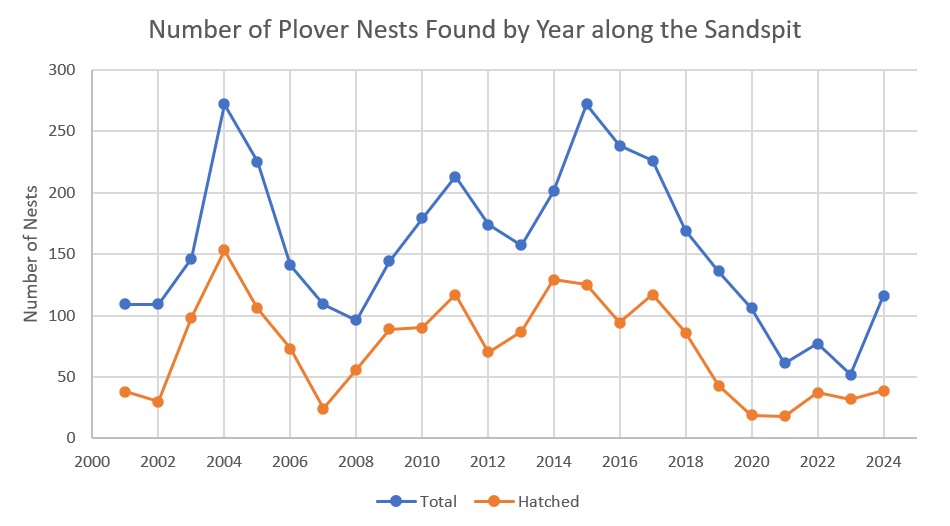
The number of plover nests found on the sandspit during breeding season surveys has been declining since 2015. However, a recent uptick in 2024 resulted in the highest number of plover nests observed in the past five years (see graph above).
Despite the increase in total nests, the number of nests resulting in successfully hatched plovers has been relatively stagnant since 2019. On average, just under half of plover nests on the sandspit are successful (see graph above). Only 34% hatched in 2024, which follows two years of higher-than-average nest success. The main culprit for nest failure on the sandspit is predation by coyotes.
Even though the road to recovery for the western snowy plover has been long and challenging, the trend in our region is a gradual, positive trend in plover numbers, which would not be possible without the management actions and stewardship of State Parks and other partners.