Morro Bay is a jewel of the Central Coast, attracting residents and visitors for sailing, paddling, and swimming. These activities are a big part of what makes the bay special, but they can only be enjoyed safely when the water is clean. Pollutants like bacteria, viruses, and protozoa can cause illnesses in people and wildlife.
For nearly 20 years, Estuary Program staff and volunteers have ventured out to the bay each month to monitor for indicator bacteria, which are microorganisms that indicate whether fecal contamination may be present. This long-term record helps us track trends in water quality and potential impacts on bay uses such as recreation and shellfish farming.
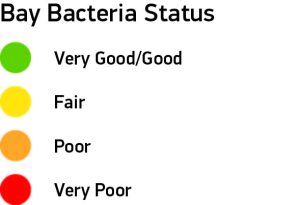
Bay Bacteria Status
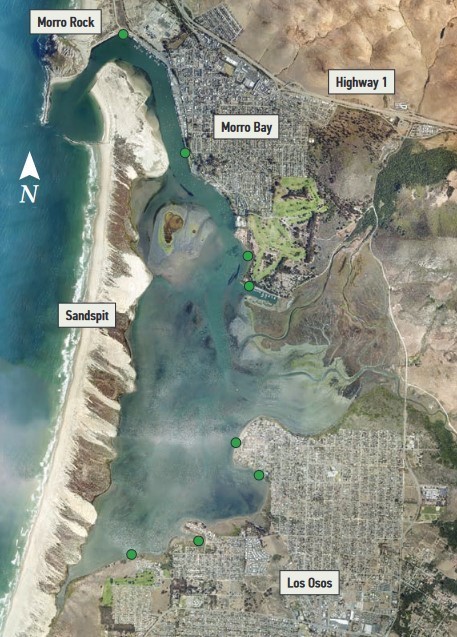
This map shows the eight sites where the Estuary Program has monitored water quality monthly from 2005 through 2024. The green color of the circles indicates that bacteria levels are low and that these sites are typically safe for swimming. However, runoff from a storm can carry pollutants including bacteria into the bay, so public health officials typically recommend staying out of the water for 72 hours following a storm.
How We Monitor Bacteria
The Estuary Program and its volunteers have monitored bacteria in local waterways for nearly 20 years. We began a collaboration on the bacteria monitoring effort in 2022 with Drs. Laurie McConnico and Silvio Favoreto of Cuesta College. Cuesta students participate in semester-long fellowships to collect and analyze bacteria samples from a series of creek and bay shoreline sites. Continue reading below to learn about the process of monitoring for bacteria in our waterways.
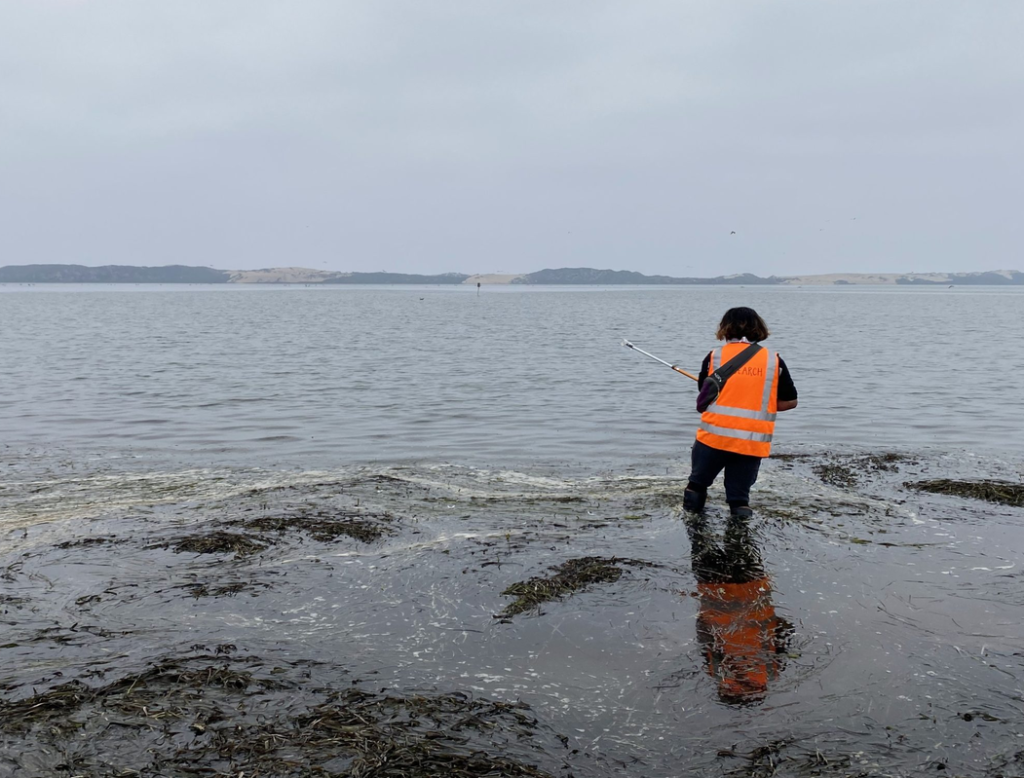
Each month, volunteers use sterile techniques to collect water samples from bay and creek sites for analysis.
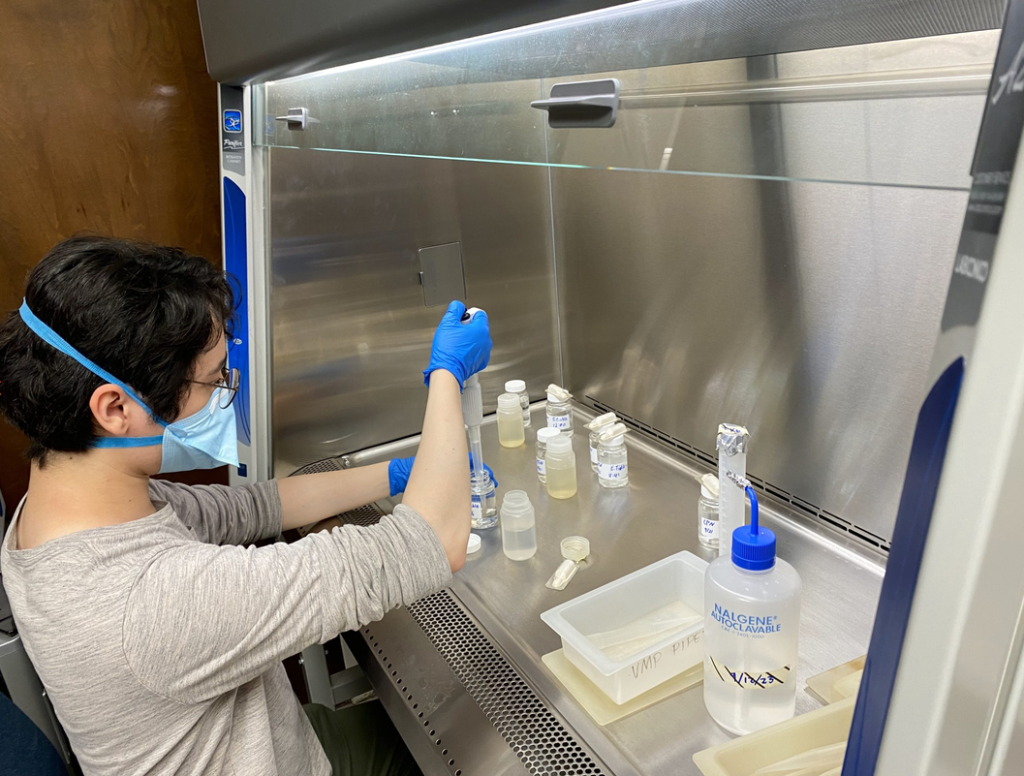
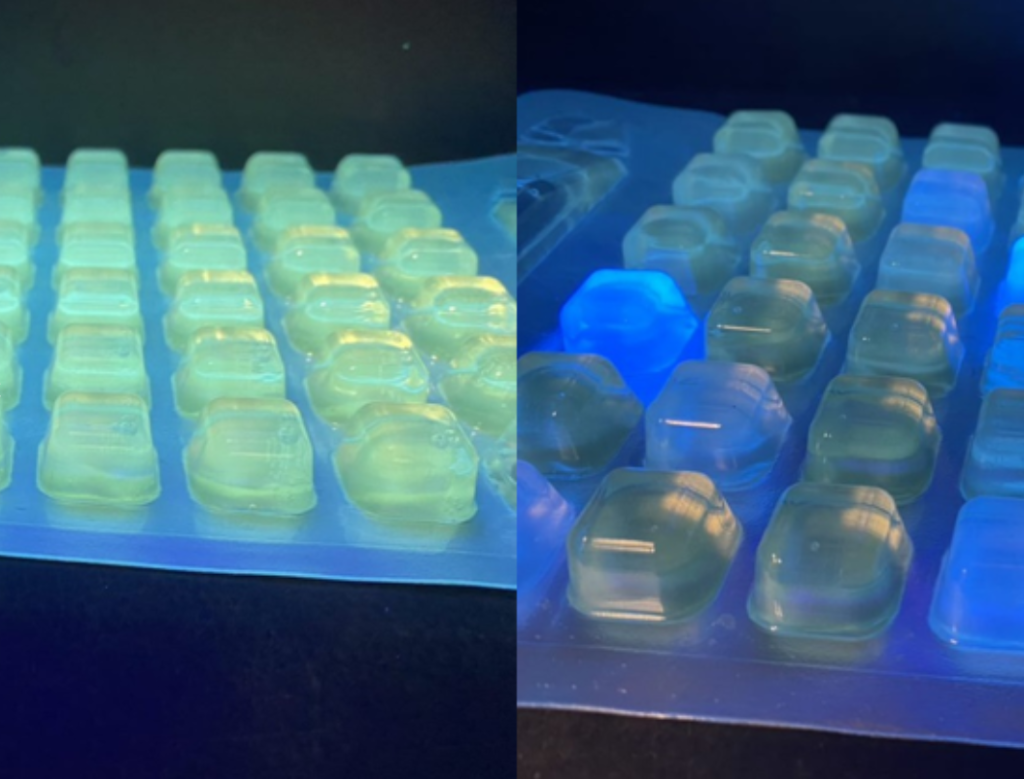
Students then bring the samples to Cuesta’s lab for processing. They add a chemical indicator to the water sample and seal them into trays. The trays are incubated overnight, allowing the bacteria to grow and trigger the chemical indicator.
When the water samples contain bacteria, the chemical indicator causes the water to fluoresce. In the trays pictured above, the number of individual wells with fluorescence indicates the concentration of bacteria in the sample. Trays with low numbers of fluorescent wells (left) have low concentrations of bacteria, and trays with many fluorescent wells (right) have higher bacteria concentrations. The final results are shared with partners such as landowners, agencies, and public health officials.
For more information on our bay bacteria research, scan the QR code below.