Header photo courtesy of Christa Renee.
Is the bay clean enough to support commercial shellfish farming?
Yes, in active harvesting areas.
The waters of the Morro Bay estuary support a thriving aquaculture industry. The Morro Bay Oyster Company and Grassy Bar Oyster Company provide Pacific oysters to restaurants and grocery stores locally and beyond. The California Department of Public Health oversees testing to ensure that the shellfish growing waters remain clean and safe.
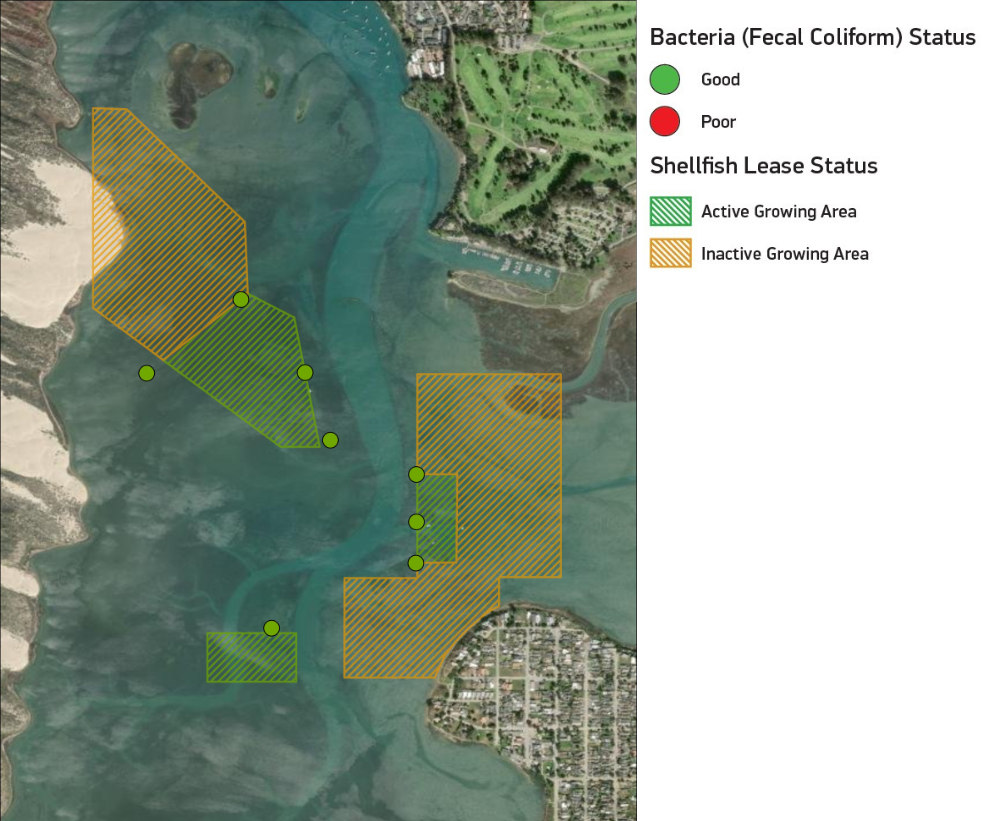
The crosshatched portions of the map below illustrate the areas where shellfish farming could potentially occur. Areas shown in green indicate areas of active shellfish farming. These areas undergo water quality testing for bacteria to determine if the waters are clean enough for shellfish harvesting. Orange areas indicate either historically poor water quality or insufficient data to assess conditions.
Life on an Oyster Farm
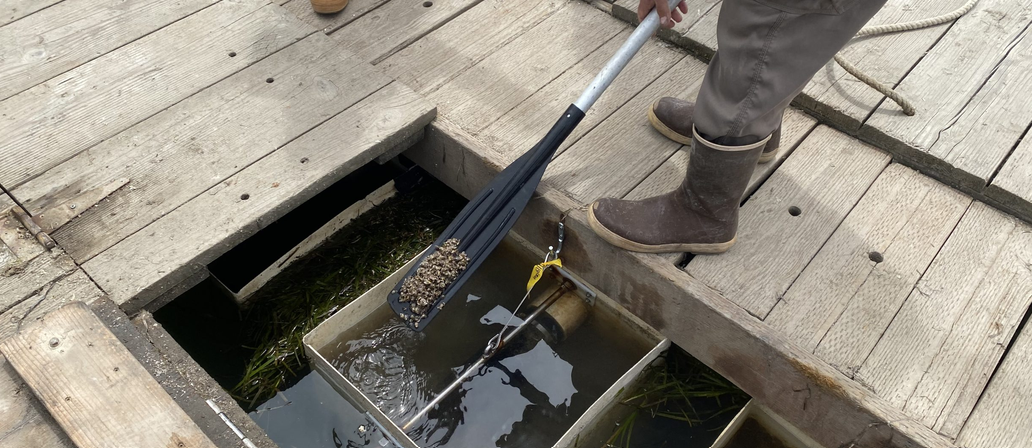
Oysters begin their journey into the Morro Bay estuary as “seed,” which are juveniles that are around 3mm in size. Oyster seed are first grown in Floating Upweller Systems (FLUPSYs) that use pumps and the power of tidal currents to circulate oxygen and nutrients throughout the water. Oysters can grow more than 1mm per week in the FLUPSY, after which they are transferred to mesh bags to grow to market size. Photo courtesy of Grassy Bar Oyster Company.
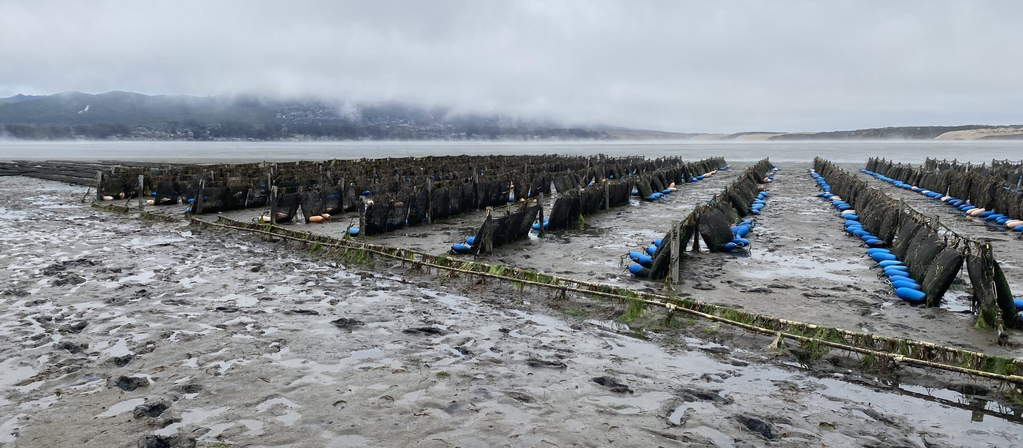
Traditionally, oyster farmers had to manually shake the bags to separate the shellfish and prevent clumping and uneven growth. Instead of doing this by hand, oyster farmers in Morro Bay now let the tides do the work. They string the oyster bags up on cables that are secured to posts anchored in the bottom of the bay. During low tides, the bags hang from the cables, but during high tides, floats on the bags rise and tip the oysters to the bottom of the bag. This periodic movement of the bags by the tides saves many hours of human labor. Photo courtesy of Grassy Bar Oyster Company.
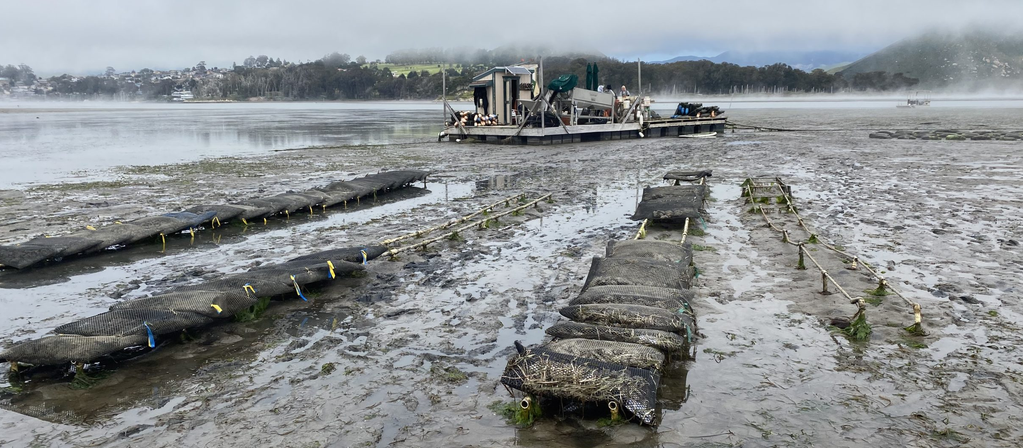
On average, over 1.5 million oysters are harvested from Morro Bay and brought to market each year. This can vary significantly depending on conditions throughout the year. Large storm events and harmful algal blooms can cause closures and die-offs that impact the amounts that are grown and sold. Photo courtesy of Grassy Bar Oyster Company.
For more information on our shellfish research, scan the QR code below.