Aquatic plants and animals require clean waters that have adequate oxygen and are free of pollutants. Estuary Program staff and volunteers conduct ongoing monitoring of oxygen levels, nitrate pollution, and creek health indicators, to better understand whether the waters of the bay and creeks support the most sensitive wildlife.
Bay Oxygen Status
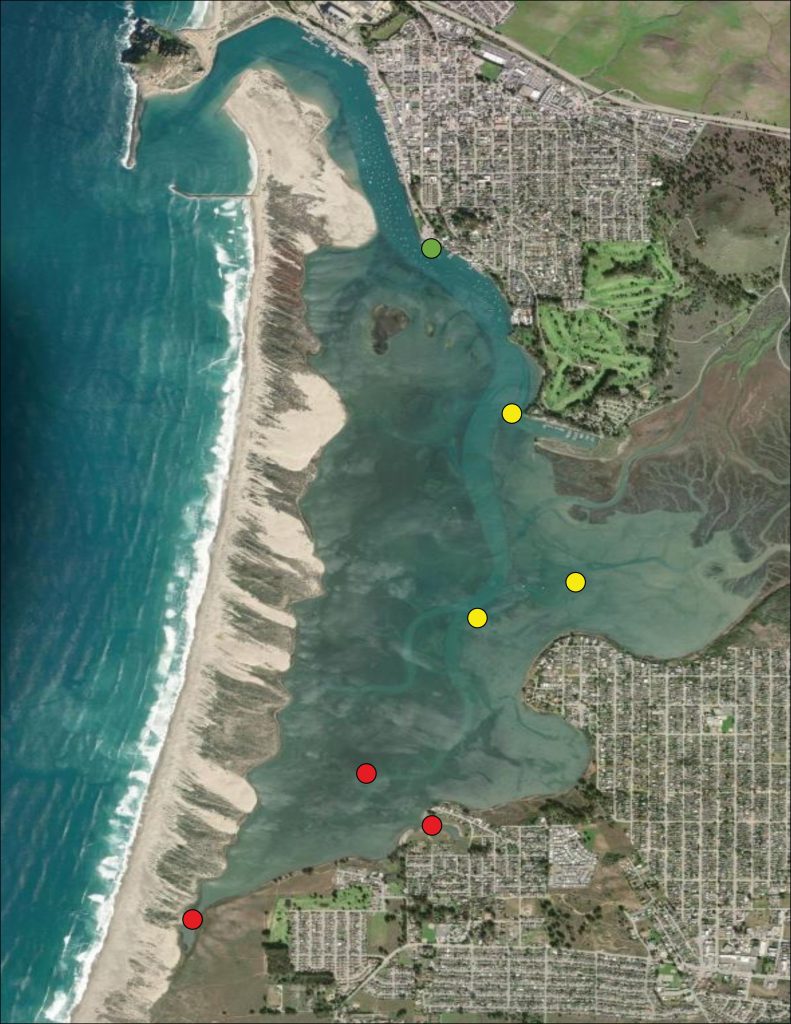
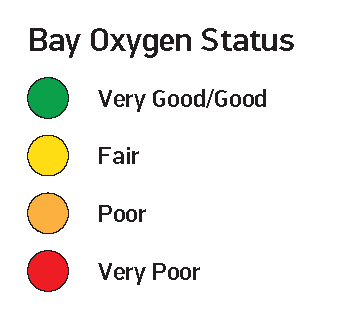
To better understand the health of the bay, Estuary Program monitoring volunteers kayak out to measure the lowest oxygen levels of the day at seven different sites.
This monitoring effort has been conducted for over 20 years, and the data consistently shows a trend of decreasing oxygen as you move from the front bay to the back bay. In the front bay (near Morro Rock), cold and well-oxygenated water is pushed in from the ocean by incoming tides. Conversely, in the back bay, the shallow waters limit tidal mixing, leading to lower oxygen levels. Although lower than ideal in some locations, bay-wide oxygen levels have remained relatively stable over time.
Creek Health in the Watershed
One way to assess creek health is by monitoring the organisms living in the creek. By collecting and analyzing macroinvertebrates (animals without a backbone that you can see with the naked eye), we can determine whether the creek habitat is suitable for sensitive species like steelhead trout.
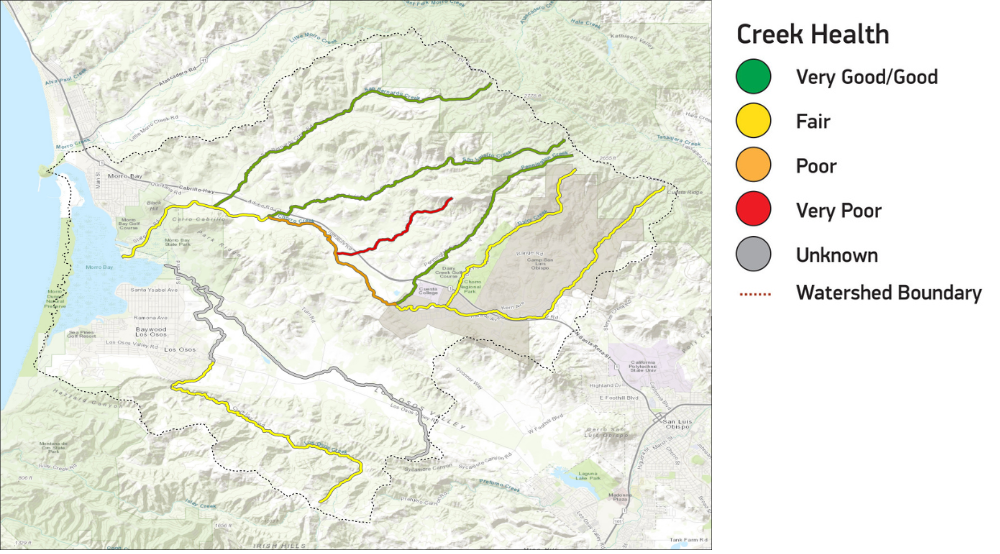
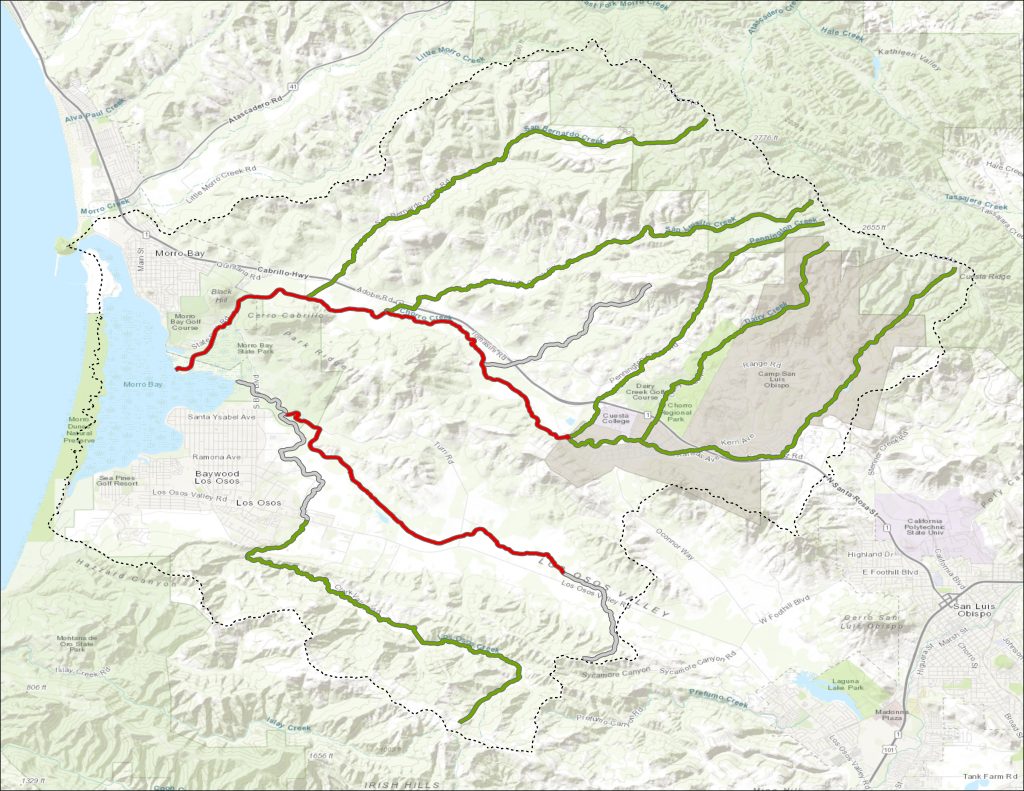
This map illustrates the average health scores for each creek in the Morro Bay watershed, using data going back nearly 30 years. The creek segments colored green have Good scores, meaning they have higher quality habitat that can support sensitive species of macroinvertebrates. Sections of creeks colored red have scored as Very Poor, meaning that the creek may not be able to support any sensitive macroinvertebrates. Factors such as water levels, water quality, plant cover, and sediment in the creek can influence habitat quality.
How We Monitor Creek Health
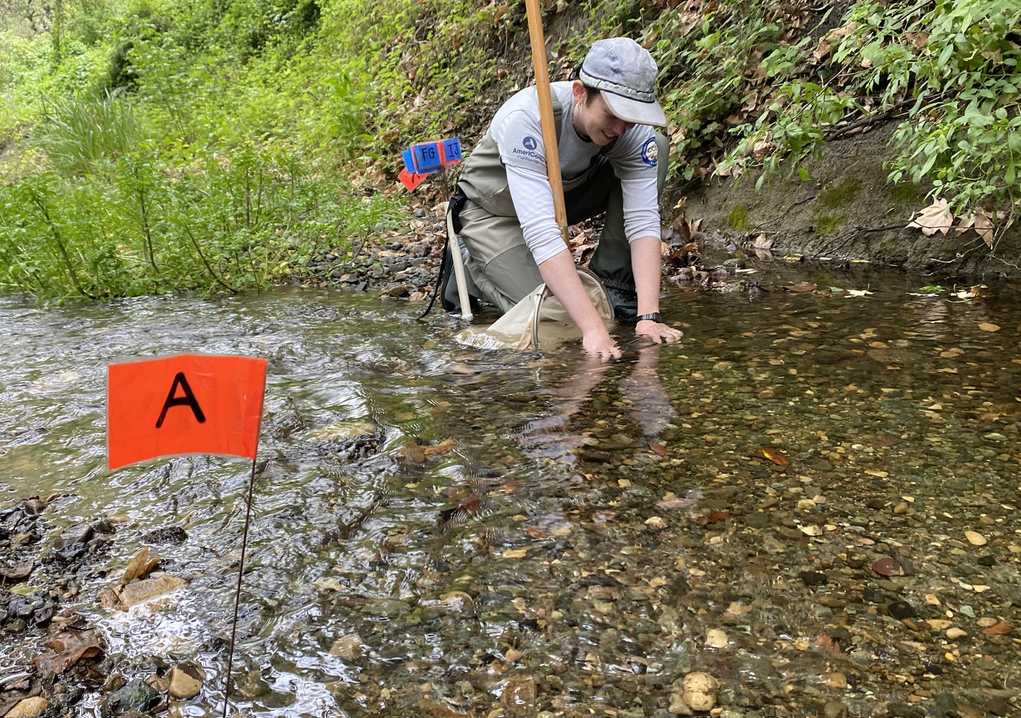
Each spring we work with our partners and volunteers to conduct this monitoring at sites throughout our watershed. We collect macroinvertebrates and take measurements of the habitat to determine whether the creek would support sensitive species.
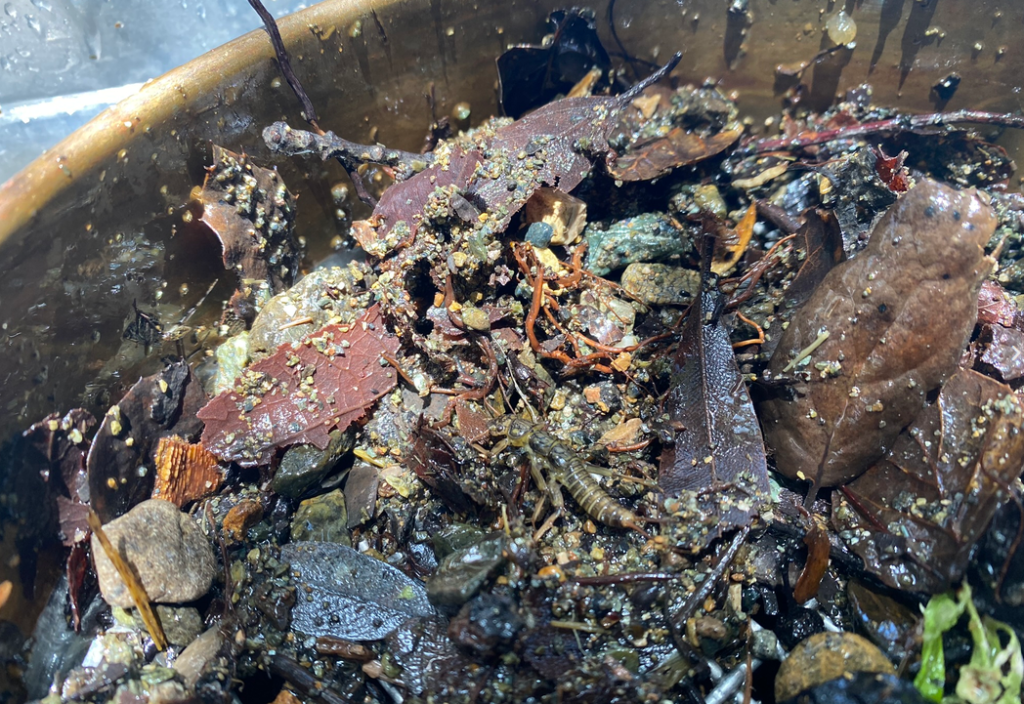
To collect macroinvertebrate samples, we scrub the rocks and stir up the sediment on the creek bottom (left). This releases the macroinvertebrate larvae which drift with the current into our net. After collecting our sample, we empty the contents of the net into a sieve to sort out the sticks, rocks, and leaves (right). The macroinvertebrates are then preserved and sent to a taxonomy lab for identification and counting. This sample from Dairy Creek contains a large stonefly larva, a species that typically indicates good water quality for sensitive aquatic life.
Nitrates in the Watershed
Reports of harmful algal blooms are becoming more frequent. While these blooms can be influenced by factors like water temperature and currents, they can also be driven by excess nutrients such as nitrates, which come from sources like fertilizer, stormwater runoff, and wastewater treatment plants. Excess algae growth can crowd out beneficial plants and deplete oxygen from the water, making it harder for fish and other aquatic life to survive. Tracking nitrate levels in our local creeks is essential for understanding overall creek health.
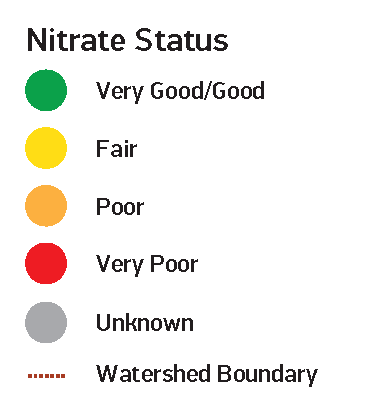
This map shows an analysis of nitrate concentrations for creek segmentsthroughout the Morro Bay watershed. Data indicatethat the creeks in our upper watershed generally have low levels of nitrates, which supports a healthier aquatic environment. Lower creeks have much higher levels of nitrates. High nitrate concentrations can cause imbalances in the water quality, resulting in low oxygen levels that can harm sensitive wildlife like steelhead trout. Grayed–out creek segments indicateareas without enough data for assessment.
For more information on our water quality research, scan the QR code below.