Do the estuary and watershed support a healthy population of steelhead?
Do the estuary and watershed support a healthy population of steelhead?
No, the local steelhead population continues to be threatened even with some habitat improvement.
The Morro Bay watershed is home to a unique species called steelhead trout (Oncorhynchus mykiss). These fish are born in freshwater streams like Chorro Creek. Some of these fish spend their entire lives in the creek and are known as resident rainbow trout. Others, known as steelhead, spend a few years in fresh water and estuarine environments before journeying to the ocean. Whether a fish becomes a steelhead trout or remains a resident rainbow trout depends on genetic and environmental factors.
Steelhead require healthy creeks, estuaries, and ocean habitats throughout their life cycle. The Estuary Program works to protect creek habitat, water quantity, and water quality to benefit this threatened fish population.
Protecting Steelhead from Predators
Sacramento pikeminnow (Ptychlocheilus grandis) are invasive fish that compete with the steelhead in our watershed for habitat and food. Adult pikeminnow also consume juvenile steelhead. In 2017, we began pikeminnow management efforts to remove them from our creeks to support steelhead recovery. Our early work indicated that removing one pikeminnow can protect around 150 to 200 juvenile steelhead annually.
The invasive Sacramento pikeminnow are voracious predators that consume juvenile steelhead and compete with them for food and habitat.
The Estuary Program works with partners to manage pikeminnow. One method of management involves electrofishing, where fish in the vicinity are temporarily stunned by an electric current put into the water using an electrofishign backpack. The fish are scooped up to be identified and measured, and all but the pikeminnow are returned to the creek.
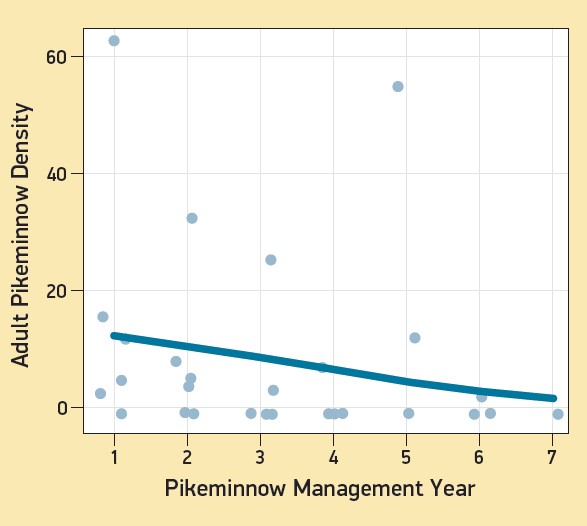
The graph shows the density of adult pikeminnow (number of fish in a stretch of creek) since our management efforts began in 2017. Current analysis indicates that with more years of pikeminnow removal, it becomes increasingly unlikely to find large pikeminnow at a site. The overall trend after several years of suppression has been a reduction in adult pikeminnow, which are more likely to prey on juvenile steelhead.
There are many environmental variables that can affect steelhead populations, like warming temperatures, available habitat, and the amount of water in creeks. The Estuary Program and our partners work to address as many of these factors as we can, and reducing the population of predators is one way we can help support our watershed’s steelhead.
Tracking Steelhead Growth and Movement
We recently completed a steelhead tracking study over two years of spawning seasons to monitor the growth and movement of steelhead to support our understanding of how and when these fish migrate between our creeks, the estuary, and the ocean. This helps us identify times of year when fish need enough water flowing through creeks to migrate and when we should avoid certain activities that might interfere with their movement.
The method used to track fish for the project is called mark-recapture. Backpack electrofishers were used to temporarily stun and capture fish to be weighed and measured.
During initial capture, steelhead of sufficient size were anesthetized, implanted with a Passive Integrated Transponder (PIT) tag, and returned to the creek. These tags are small microchips that uniquely identify each fish, similar to the microchips used for dogs and cats.
As tagged fish move through the creeks and into the estuary, we monitor their movements with stationary PIT-tag antennae in lower Chorro Creek. This special type of antennae stretches across the creek so that fish can easily swim over it. As fish pass by it, their unique identifiers are recorded. If tagged fish were recaptured during the study period, we weighed and measured them to track their growth.
A total of 1,225 steelhead trout were captured during the study, and 870 were large enough to tag. Of the 201 tagged fish detected at the antennae, nearly 60% were likely resident trout that would spend their entire lifespan in the creeks. The remaining 81 were fish that moved into the estuary to smolt (transition from freshwater to saltwater habitat), a process that occurred primarily between January and April. Most of these smolts left the creeks and did not return, while a handful moved back and forth between Chorro Creek and the estuary.
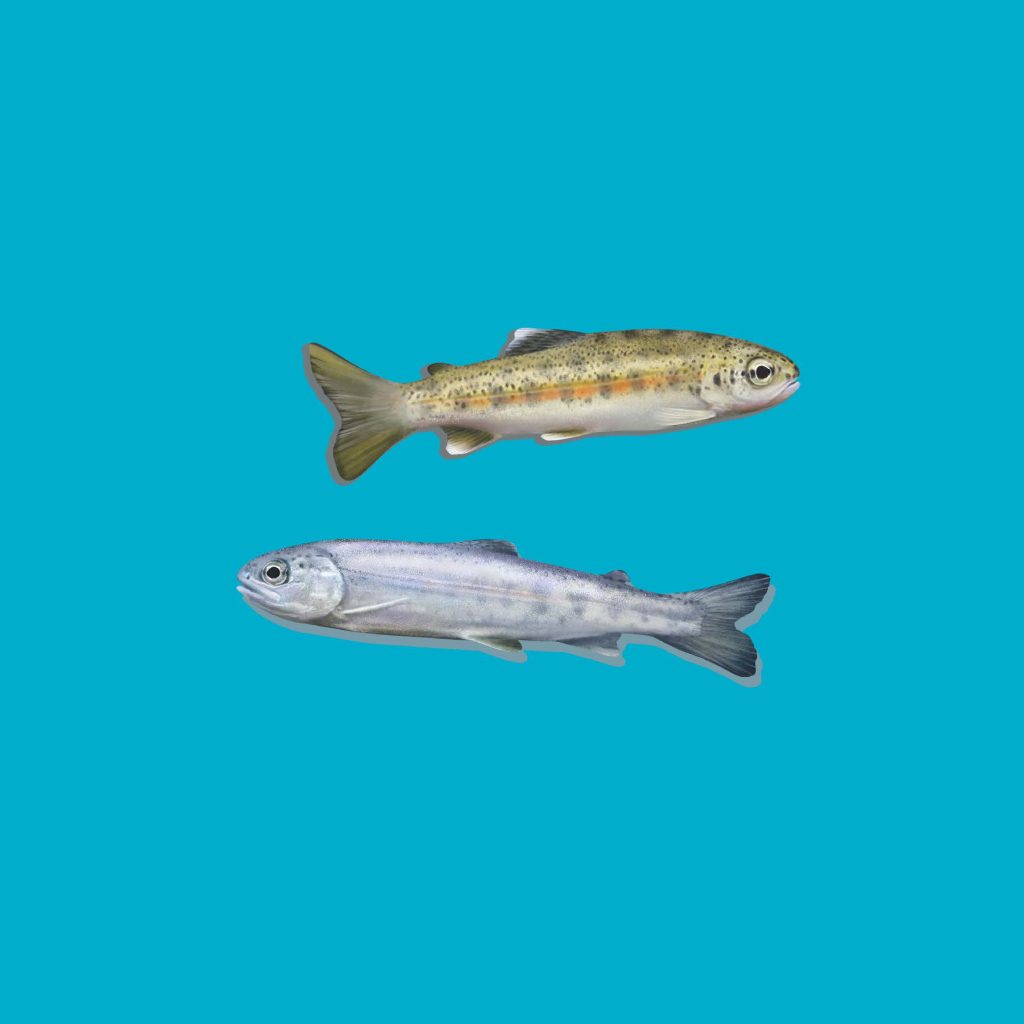
This illustration shows two forms of steelhead trout as it prepares for life in the ocean in a process known as smolting. As the fish move from freshwater to saltwater habitats, they lose their speckled appearance and dark spots (above) and become more silver (below), a change that allows for better camouflage in the estuary and ocean. Illustrations by Catie Michel.
This study provided fascinating new information, and we hope to expand the effort to better understand how steelhead utilize other freshwater tributaries like San Bernardo, Pennington, and Dairy Creeks.
How Much Water is Enough: Protecting Our Fish
Steelhead and resident rainbow trout rely on cool, clean water to survive. During the spring and summer, the amount and quality of the water are especially critical. Steelhead typically spawn in the spring between February and April. If adequate water is not available during this timeframe, spawning behavior or success could be impacted. In the summer, steelhead are at their most vulnerable since low water levels and warmer temperatures can impact oxygen availability. Low oxygen can lead to stress or even mortality for fish and other sensitive aquatic species.
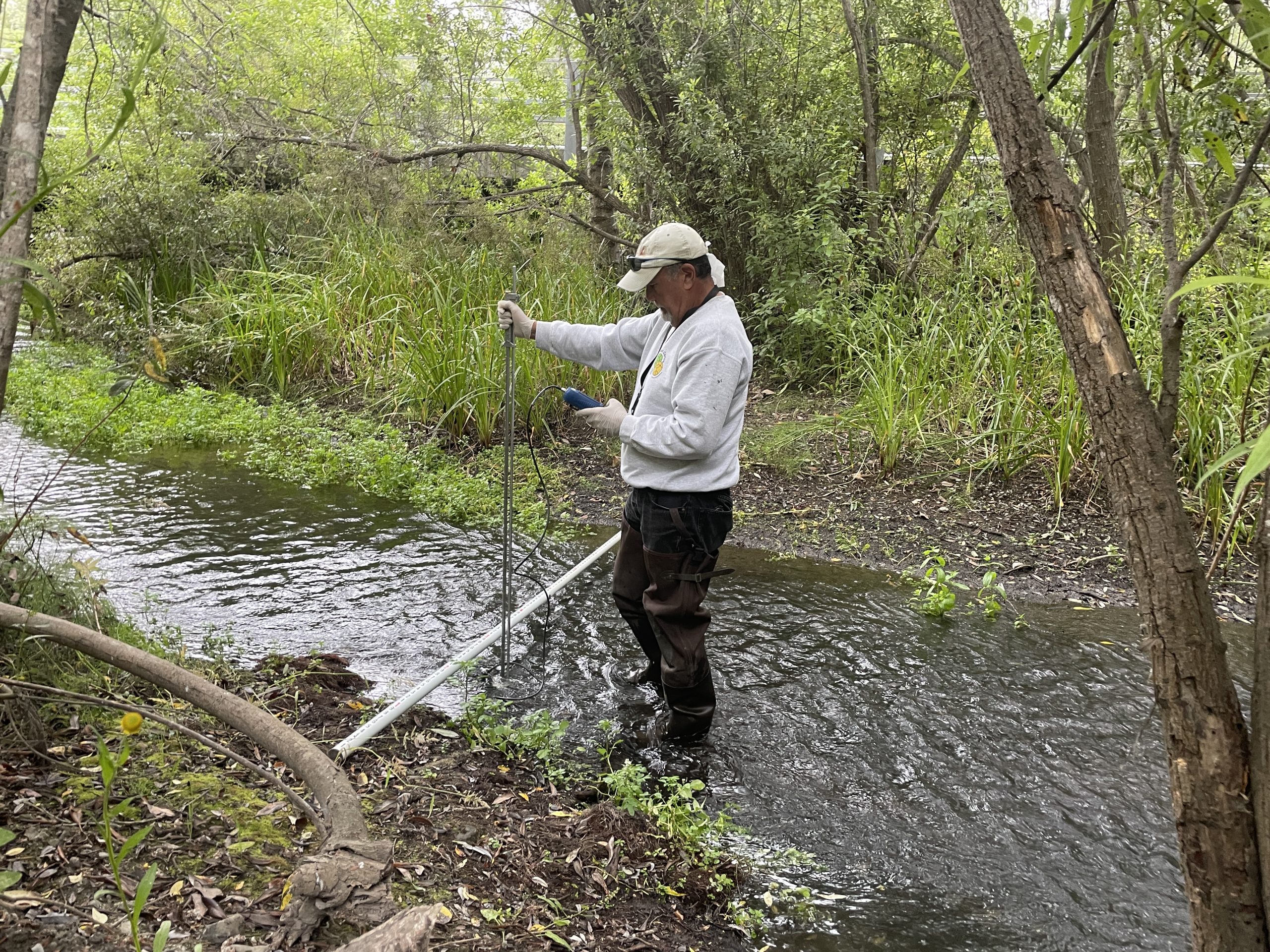
Estuary Program staff and volunteers collect stream flow measurements during the spring and summer months to determine if adequate water is present for sensitive species like steelhead trout.
To understand if our local creeks have enough water to meet the needs of steelhead and other sensitive aquatic species, the Estuary Program conducts focused streamflow measurements every other week during the spring and summer months. We compare these results to site-specific seasonal flow targets to determine if our creeks can support steelhead during these important times of the year.
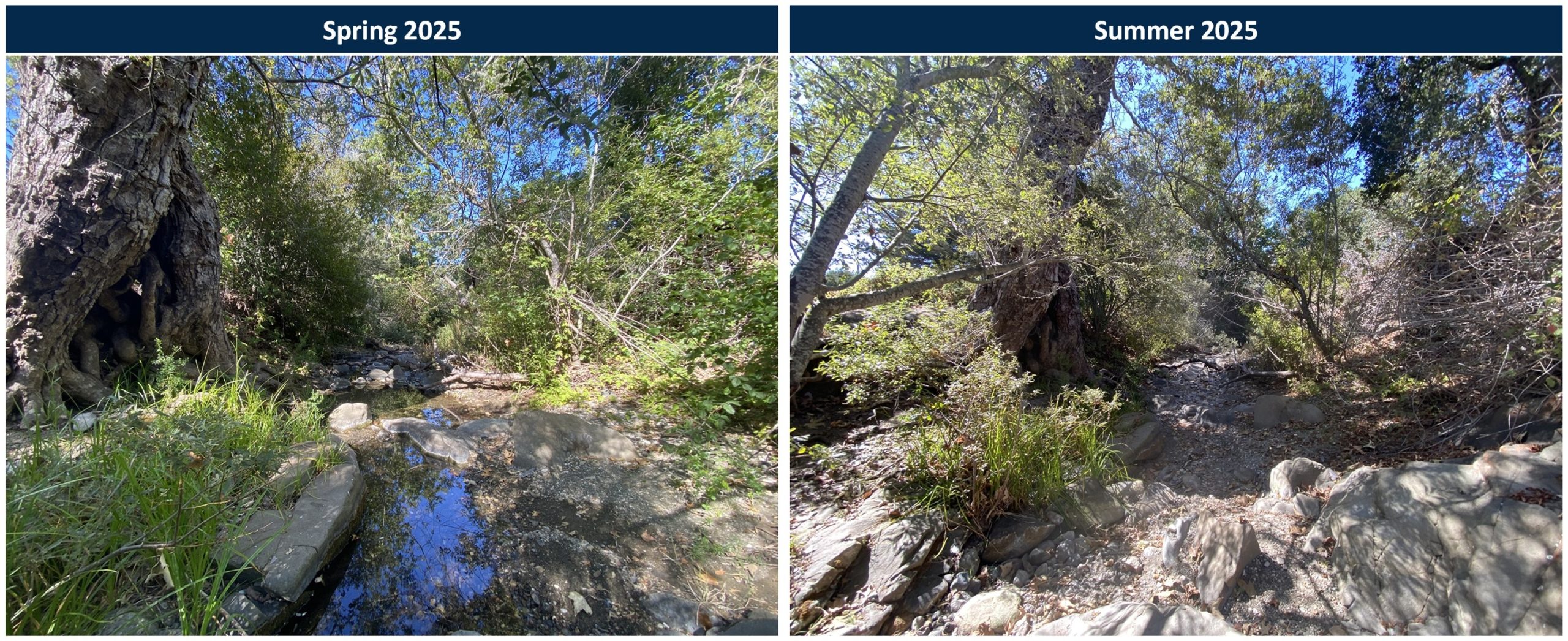
The photos above show a monitoring site on Dairy Creek that typically goes dry each summer. While this stretch of creek provides high quality steelhead habitat in the spring, a lack of water means the creek cannot support fish in the summer.
While our biweekly seasonal flow measurements capture important creek conditions, a continuous record of streamflow helps us understand the full picture. The Estuary Program maintains a network of continuous water level sensors throughout the watershed. These sensors measure water depth every fifteen minutes throughout the year. This sensor data combined with our manual flow measurements help us to create a relationship between water depth and stream flow.
This graph shows an example of water level data from Dairy Creek between January and March 2024. The peaks on the graph show storm events that increased water depth for a short period of time. This information gives us a sense of when high flows occur and how they affect flows throughout the year.
The Estuary Program operates several water level loggers throughout the watershed. We compare the continuous water level data they collect to manual flow measurements across a variety of flow conditions. This allows us to estimate creek flows year-round using the water height data collected by the sensors.
Data Notes
Fisheries data collection and pikeminnow suppression efforts were conducted by Stillwater Sciences from 2017 to 2023 along Chorro Creek. The dots on the graph indicate the density of pikeminnow longer than 70 mm in segments of Chorro Creek where suppression efforts have been conducted annually since 2017 and does not reflect all data collected. The solid line indicates the overall trend in fish size. Stillwater Sciences developed the study protocol and conducted the steelhead growth study on Chorro and San Luisito Creeks from 2022 through 2024.