The Morro Bay watershed is home to a wide variety of wildlife. The Estuary Program periodically deploys motion-activated wildlife cameras to explore the many species that inhabit our area. Our team recently retrieved a camera that had been deployed on Upper Chorro Creek, and we are excited to share the results. We hope you enjoy some of the charismatic creatures whose images were captured this past year.
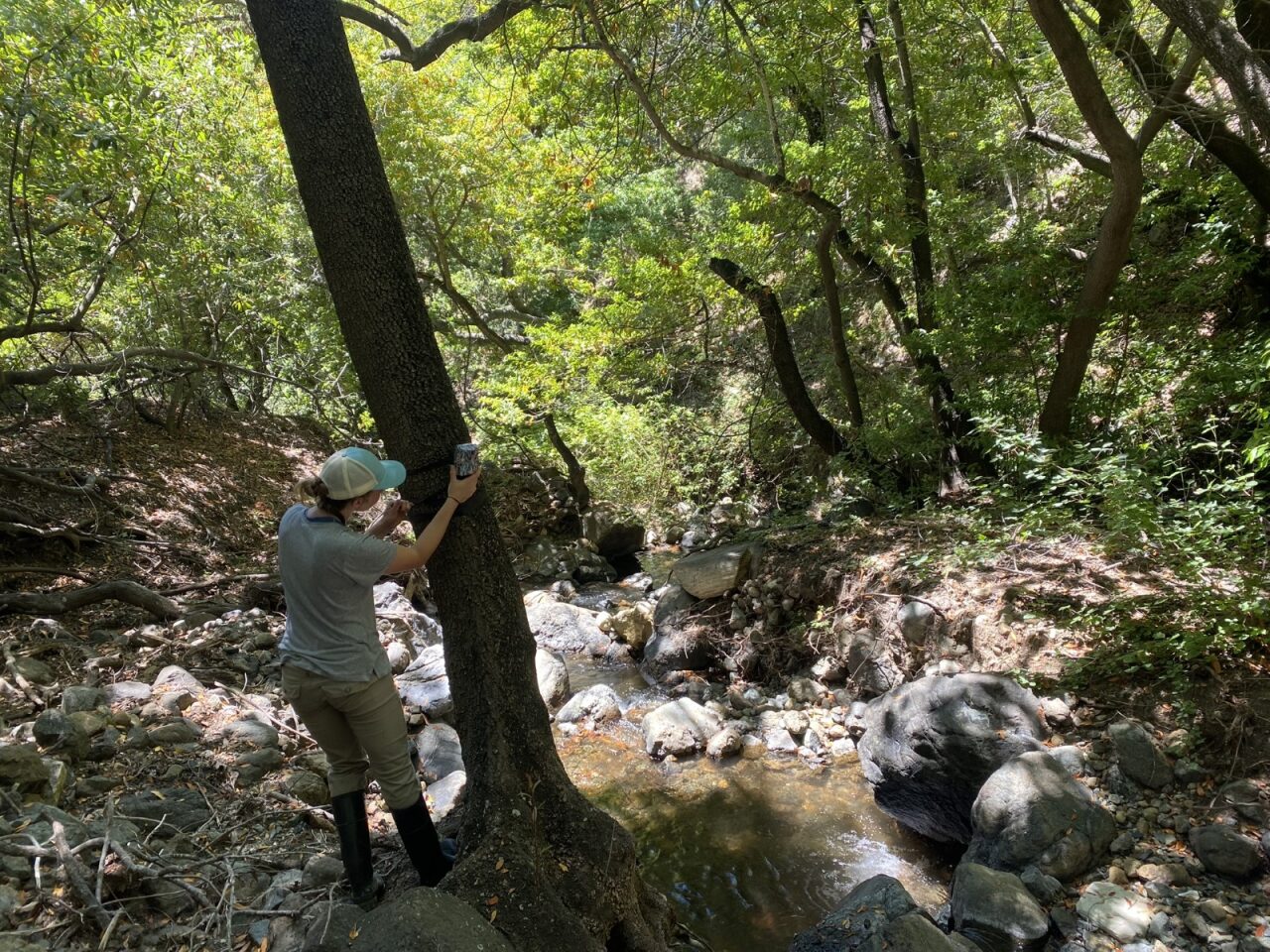
Deploying Our Cameras
To capture a diversity of wildlife, we aim our motion-activated cameras at areas that show signs of potential animal interaction, like tracks, trails, or scat. Most have also been deployed close to freshwater streams to help us better understand which species are routinely utilizing the creek corridor. The cameras typically have a battery life of about six months, depending on how many photos are collected during each deployment.
What We Found: The Usual Suspects
Many of the animals that we capture on our cameras are what you might expect to see in your day-to-day life along the Central Coast. These species include gray squirrels, wild turkeys, opossums, mule deer, striped skunks, and raccoons.
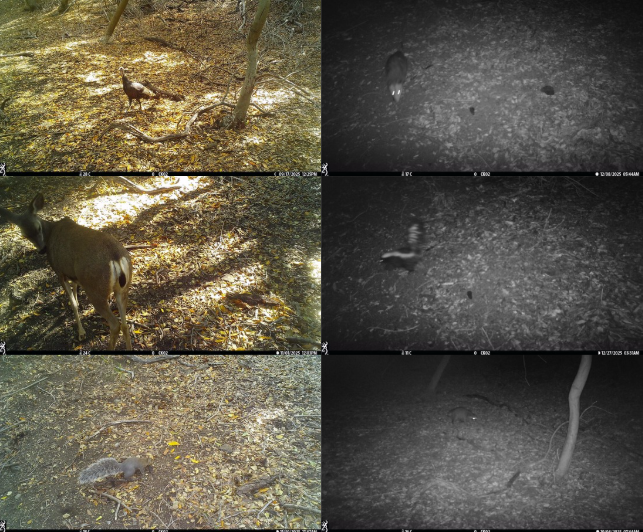
Here are some fun facts about these common species:
- Turkeys are a common local sight, often seen travelling in rafters (or flocks). Although they are not native to our ecosystem, they have become naturalized (meaning that they can reproduce and maintain a steady population), and are generally not considered to be invasive.
- The Virginia opossum is the only marsupial found in North America. While they are not native to California, they are also considered to be naturalized rather than invasive.
- The striped skunk is one of the two native skunk species found in our region. These nocturnal critters are well adapted for existing in both urban and wildland areas but are known for having poor eyesight. The other type of skunk found locally is the spotted skunk, which is more elusive and has a harder time adapting to urban areas.
- The California mule deer is the most common deer species found in the Morro Bay watershed. This species is distinctly recognizable by the black tip of their tail and large ears.
- The gray squirrel pictured above may be either an Eastern or Western gray squirrel. In many parts of the western United States, the invasive Eastern gray squirrel, introduced in the early 1900’s, has outcompeted its Western counterpart. Western gray squirrels are identifiable by their broader, bushier tail, a silvery coat, and a whiter belly.
Spotlight: Mountain Lion
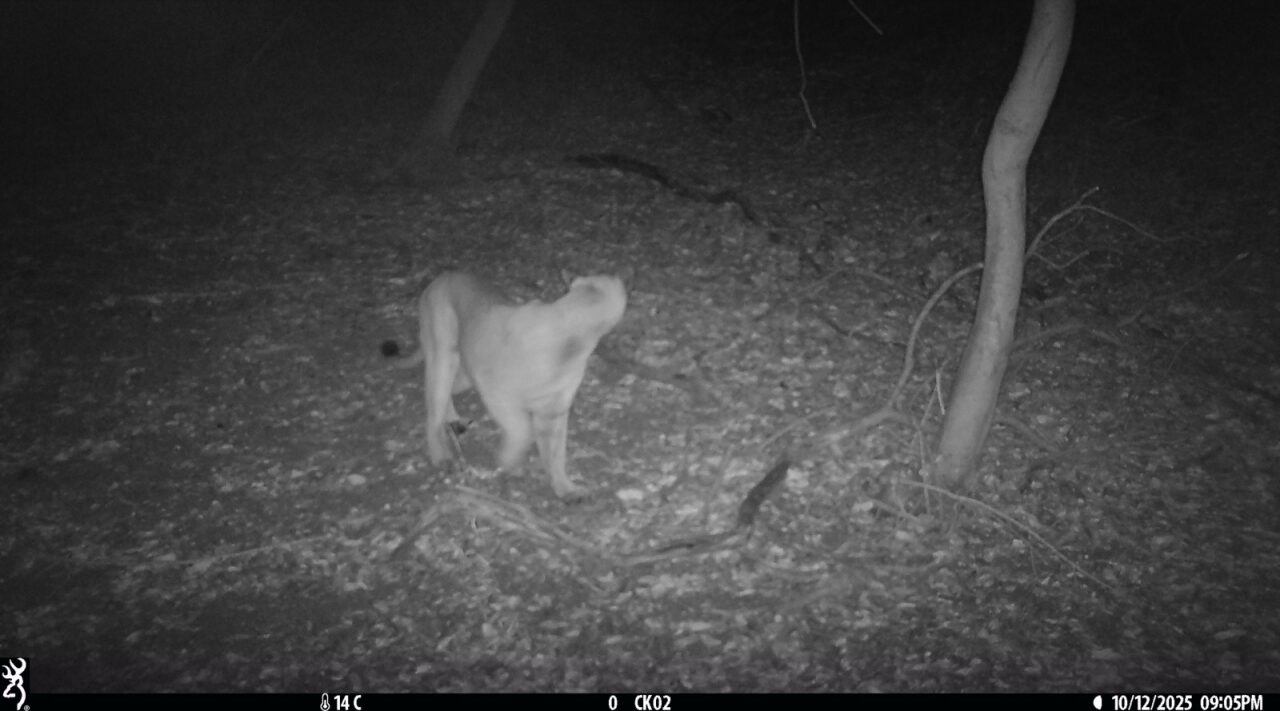
Mountain lions have the largest geographic range of any land animal in the Western hemisphere, besides humans. Despite their generally elusive and nocturnal nature, the increased human expansion into wild spaces has also led to increased encounters with these large cats. In the case that you do encounter a mountain lion, here is some guidance from the National Parks service on what you should do.
Spotlight: Black Bear
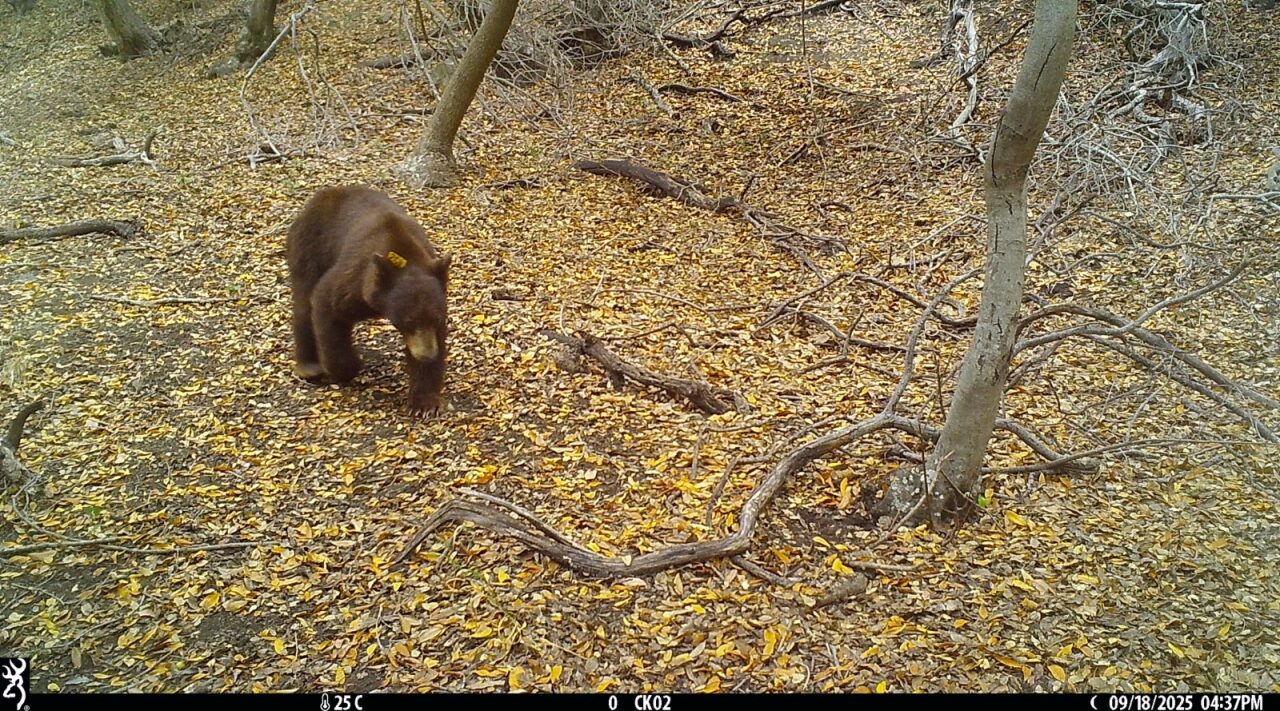
Black bears are found throughout California, with the California Department of Fish and Wildlife estimating a statewide population of between 49,000 to 71,000 black bears. While the majority are found in the North Coast, Cascades, and Sierra Nevada, they also reside in the Central Coast and Southern California at a much lower population density. Despite their name, black bears range in color between black, tan, cinnamon, and pale brown.
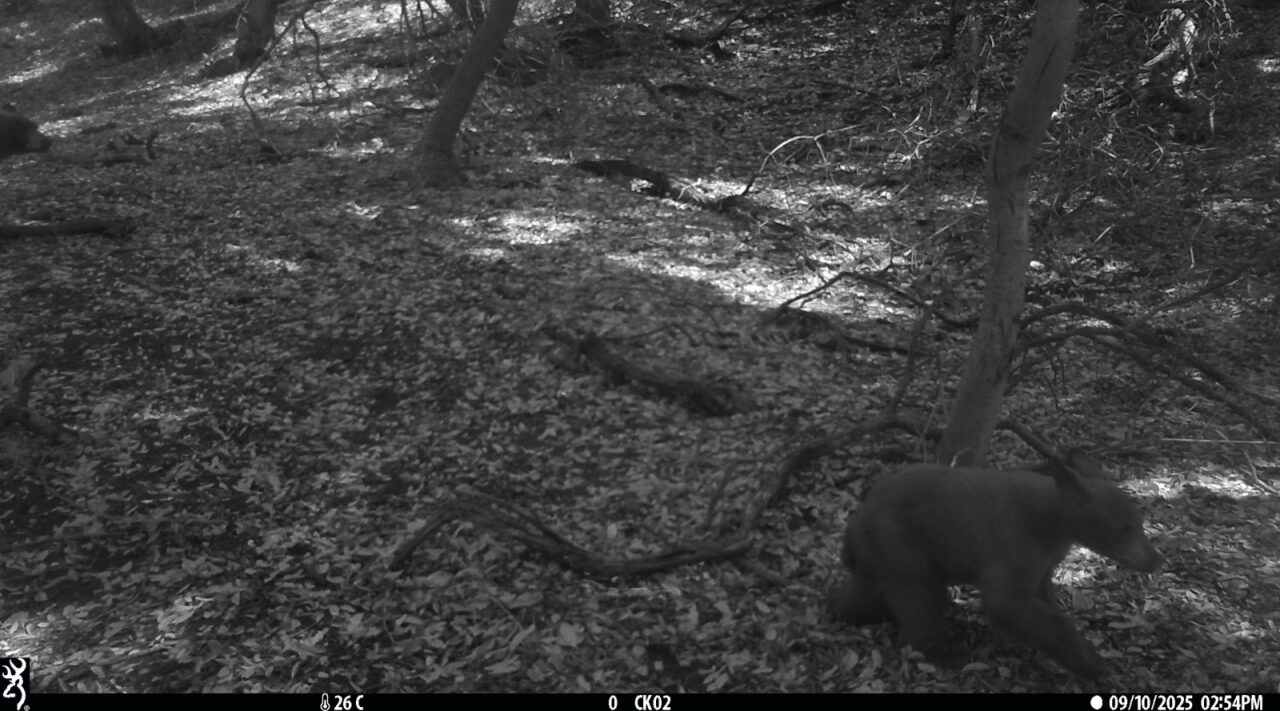
One of our most exciting photos from our last deployment was of an adult black bear that appeared to have a tag on its right ear. Estuary Program staff contacted the California Department of Fish and Wildlife to learn more. Local biologists explained that the tagged bear was assumed to be a three-year-old male, originally tagged as part of a mark-recapture study near East Cuesta ridge. The bear has likely crossed Highway 101 at least three times during the course of the study.
Spotlight: Bobcat
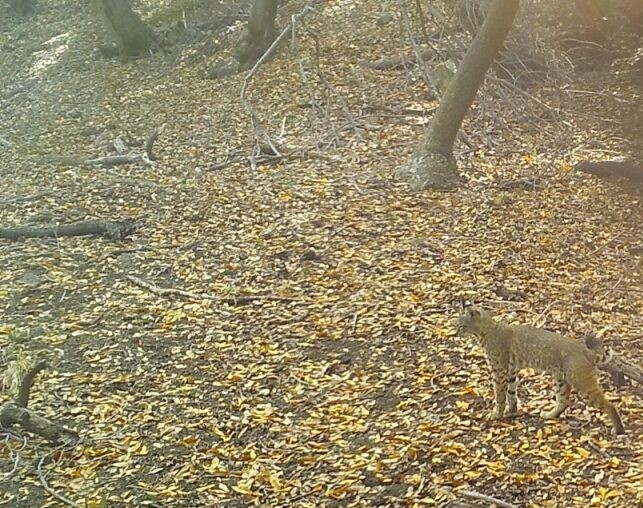
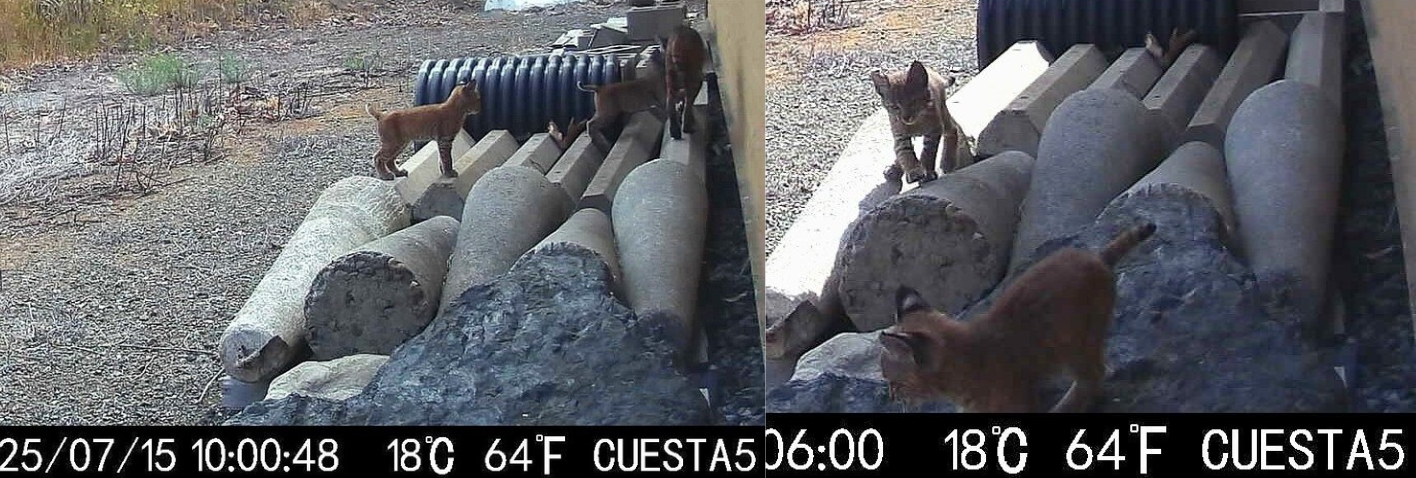
Bobcats are recognizable by their short tails, tufted faces, and distinct body markings. While these small, wild cats are elusive and generally cautious around people, sightings are becoming increasingly common due to habitat infringement. The population has recovered due to changes in hunting laws, making them more likely to be spotted.
Spotlight: Gray Fox
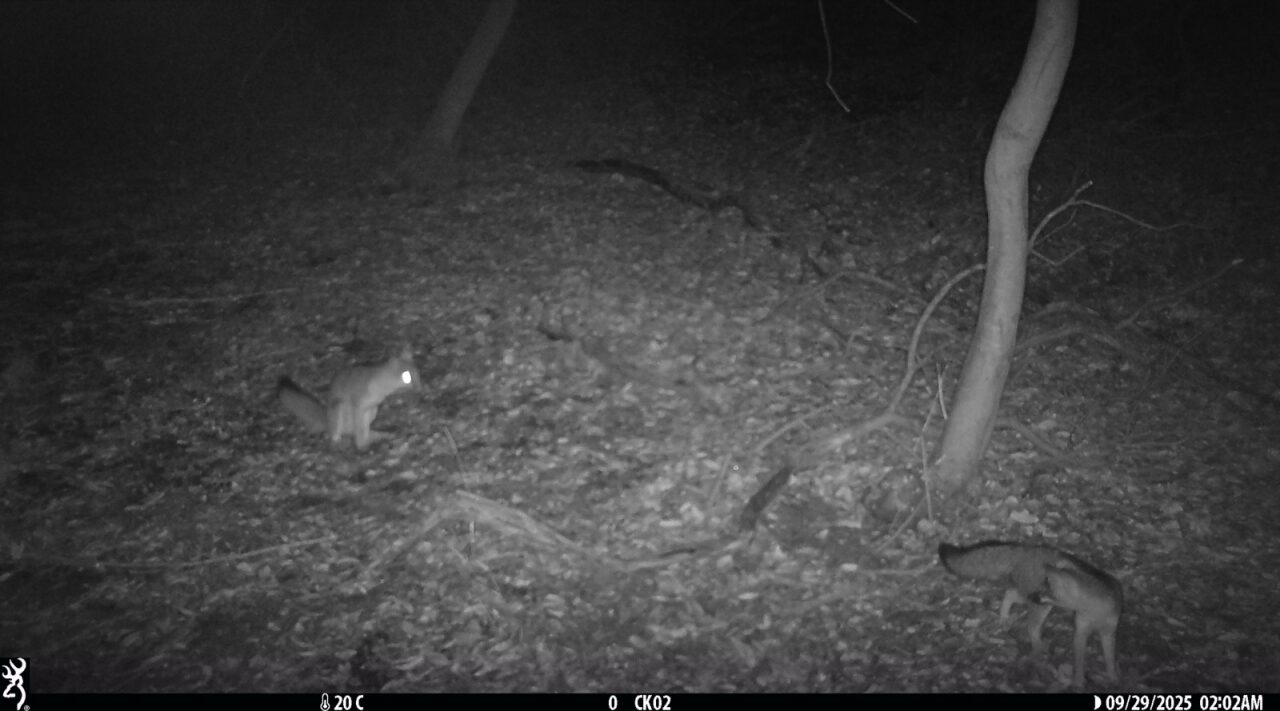
Gray foxes are California’s most common species of fox. Gray foxes typically only weigh about seven to twelve pounds and are most easily identified by the black stripe that stretches along their back and tail. Although their population is stable, they aren’t a common sight due to their nocturnal and elusive behaviors.
What’s Next?
Photos like these provided important insight into the behavior and distribution of the many animals that call our watershed home. Many of our wildlife cameras are deployed near water quality monitoring sites, allowing us to connect what we see on land to conditions in the water. These images also provide us with valuable information that we can share with our partners, which supports a more comprehensive understanding of ecological conditions and helps to inform restoration and management efforts.
The Estuary Program is excited to continue this work through an expanded network of wildlife cameras in the years to come.
References
https://wildlife.ca.gov/Conservation/Mammals/Bobcat
https://www.nps.gov/jeca/learn/nature/gray-fox-urucyon-cineoargenteus.htm
https://www.nps.gov/pore/planyourvisit/yoursafety_mountainlions.htm
https://wildlife.ca.gov/HWC/Skunks-Opossums
https://wildlife.ca.gov/Conservation/Mammals/Mountain-Lion
https://animals.sandiegozoo.org/animals/mountain-lion-puma-cougar
Help us protect and restore the Morro Bay estuary!
- Donate to the Estuary Program today and support our work in the field, the lab, and beyond.
The Estuary Program is a 501(c)3 nonprofit. We depend on funding from grants and generous donors to continue our work. - Support us by purchasing estuary-themed gear from ESTERO. This locally owned and operated company donates 20% of proceeds from its Estuary clothing line and 100% of Estuary decal proceeds to the Estuary Program. Thank you, ESTERO!
- Purchase items from the Estuary Program’s store on Zazzle. Zazzle prints and ships your items, and the Estuary Program receives 10% of the proceeds.
- Subscribe to our seasonal newsletter: Between the Tides!
- We want to hear from you! Please take a few minutes to fill out this short survey about what type of events you’d like to see from the Estuary Program. We appreciate your input!