Eelgrass is a critical habitat in Morro Bay that provides essential habitat for fish and migrating birds while also improving water quality. In spring 2023, eelgrass reached its highest recorded extent of 750 acres, surpassing the previous high by almost 300 acres. This expansion represented a massive shift from the all-time low recorded in December 2017 (9 acres) as eelgrass spread throughout the majority of the estuarine intertidal zones. Following this dramatic recovery, there has been a lot of interest in tracking what happens next, and the results from the latest drone flight are in: eelgrass has contracted to 603 acres as of spring 2025. Despite experiencing a decrease, 2025 still represents the second highest recorded eelgrass extent in Morro Bay. In this blog, we discuss the changes we’ve observed between 2023 and 2025, potential driving factors behind these changes, and how we’re keeping an eye on eelgrass health.
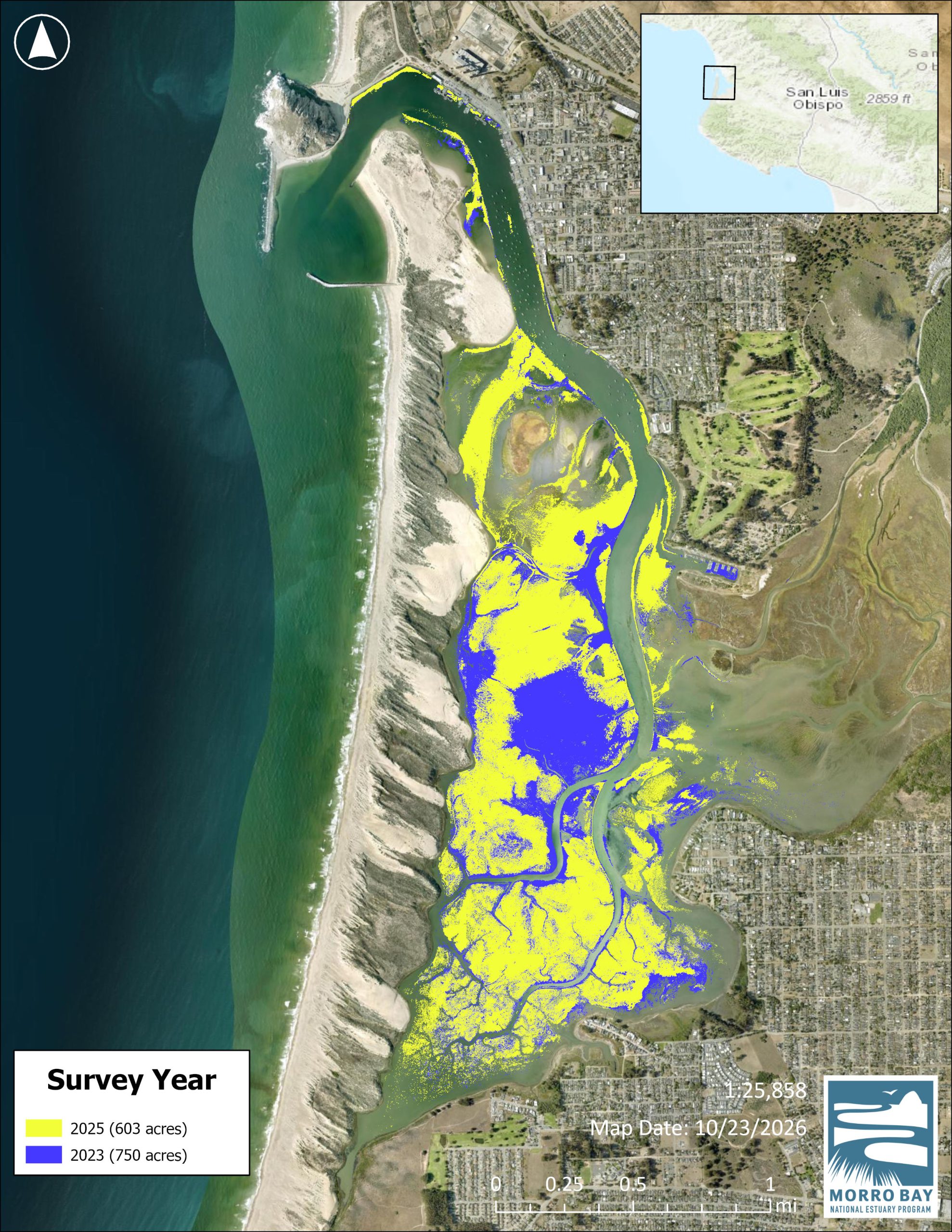
Eelgrass distribution throughout the estuary in spring 2023 (blue) and spring 2025 (yellow). Regions where the blue color is exposed represent areas where eelgrass coverage has contracted over the past two years.
Where Do We See Changes?
Most of the eelgrass that was lost was located on the edges of beds, representing the most recent growth. This can be seen in the map above, where much of the yellow extent is outlined by blue, denoting narrower coverage in 2025. One notable exception is a relatively large bare patch in the middle of the estuary, spanning approximately 60 acres. Like much of the estuary, this region had experienced a dramatic surge of eelgrass over the past five years, becoming a nearly continuous, dense bed in 2023. The concentrated loss of eelgrass in this area is noteworthy enough to raise eyebrows, so we’ve been exploring the literature and reaching out to collaborators to gain insight on likely causes.
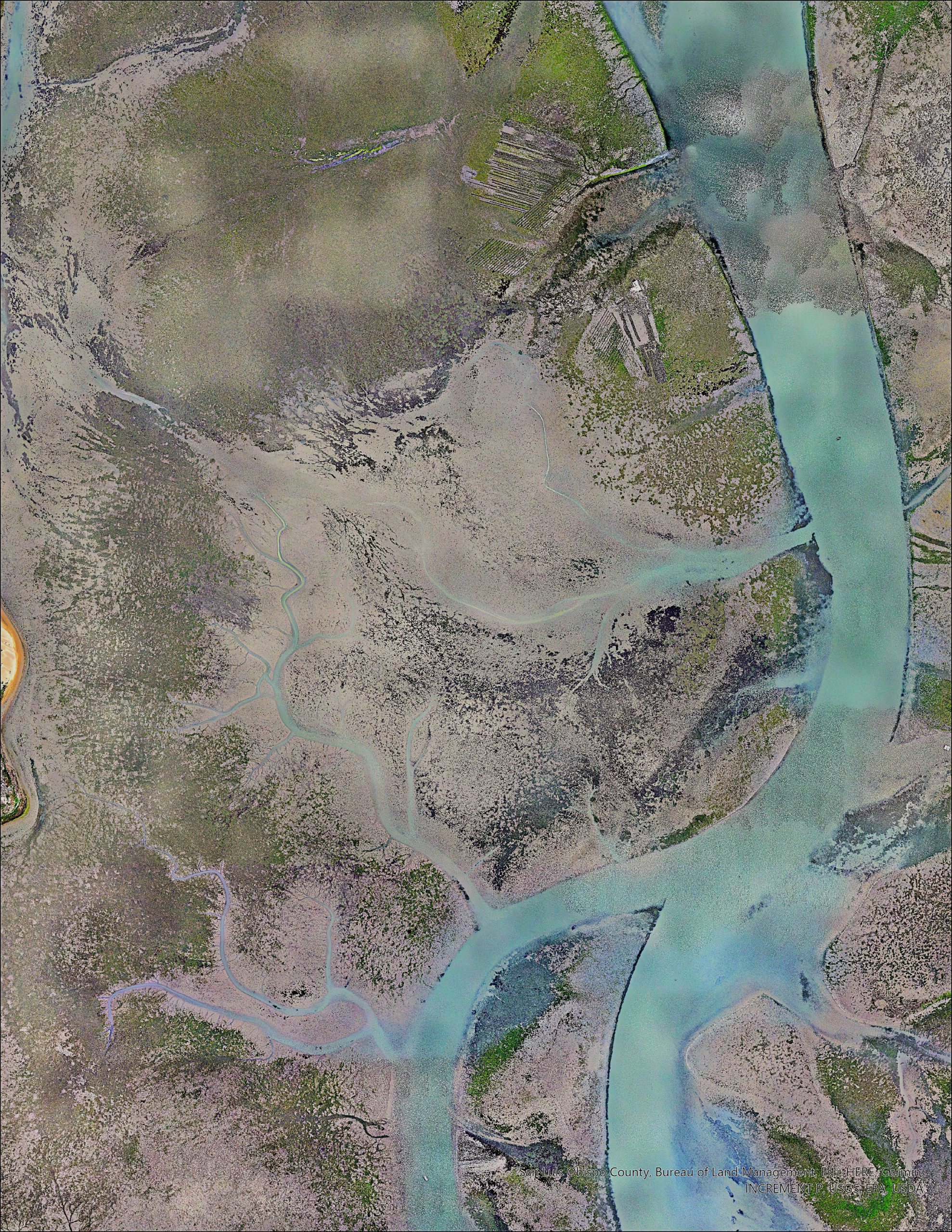
Aerial view of the 60-acre, somewhat hexagonal, area of mudflat that had previously been blanketed with dense eelgrass in 2023.
Why Did We Lose Eelgrass?
Not so long ago, losing 147 acres of eelgrass would have been considered a catastrophic decline. However, in the context of the incredible proliferation from 2021 to 2023 that brought eelgrass to places in the estuary that hadn’t seen a single blade in over a decade, this reduction feels much more like a natural course adjustment. It is possible that eelgrass was nearing Morro Bay’s carrying capacity, or had already exceeded it, meaning that we’d surpassed the acreage that could be sustained within the estuary before hitting resource and habitat limitations. This would help explain the dieback observed at the edges of the eelgrass beds. The edges represent newer growth that is more vulnerable to temperature variability, stress from drying out, and sediment mobility, all of which can make it difficult to maintain a long-term foothold.
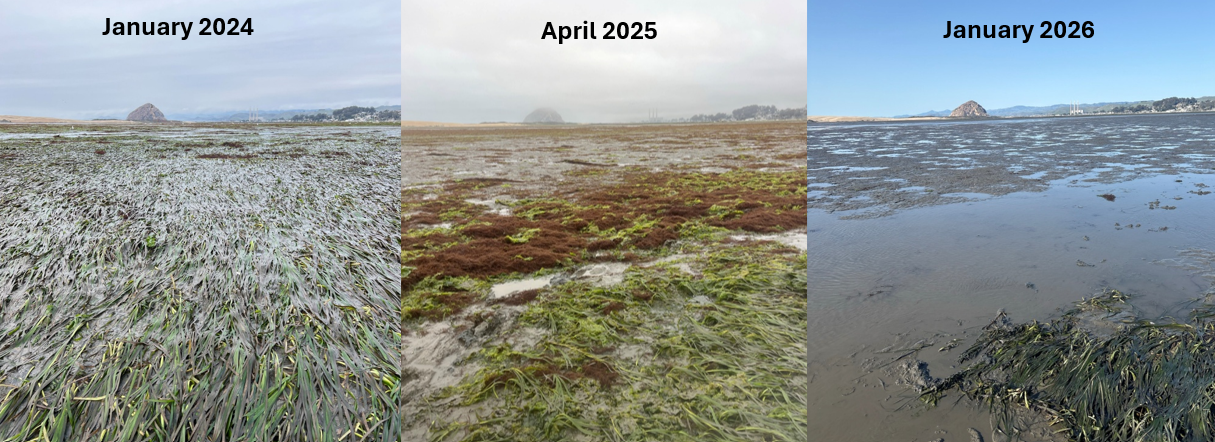
A look at the shift in vegetation within the “bare patch” from surveys conducted on the ground. This same area transitioned from a dense eelgrass bed (left), to scattered beds covered with algae (middle), and finally to bare mudflat (right).
The bare patch, on the other hand, could be indicative of a different set of processes. At this time, we don’t have the data to prove a specific hypothesis, but our leading theory is that this region has experienced acute oxygen limitation stemming from high biomass and reduced flow rates. While eelgrass can produce oxygen through photosynthesis, it also needs oxygen for respiration when sunlight isn’t available. Particularly crowded and dense eelgrass beds can reduce the rate of water flow, and during low tide windows in 2023, this 60-acre patch did not fully drain compared to less dense eelgrass patches. Reduced tidal exchange limits their exposure to incoming oxygenated water and can trap heat, further reducing the concentration of dissolved oxygen. When oxygen is severely limited, toxic chemicals like sulfides can accumulate in seagrass tissues, a process that has been shown to precede die-offs in other systems. It’s important to reiterate that this is only a theory, and there could be many other factors at play. Localized sediment accretion could have raised the elevation of this area above the optimal range for eelgrass, growth of macroalgae mats could have initiated competition for limited resources, or an entirely novel combination of stressors might have convened in just the right way.
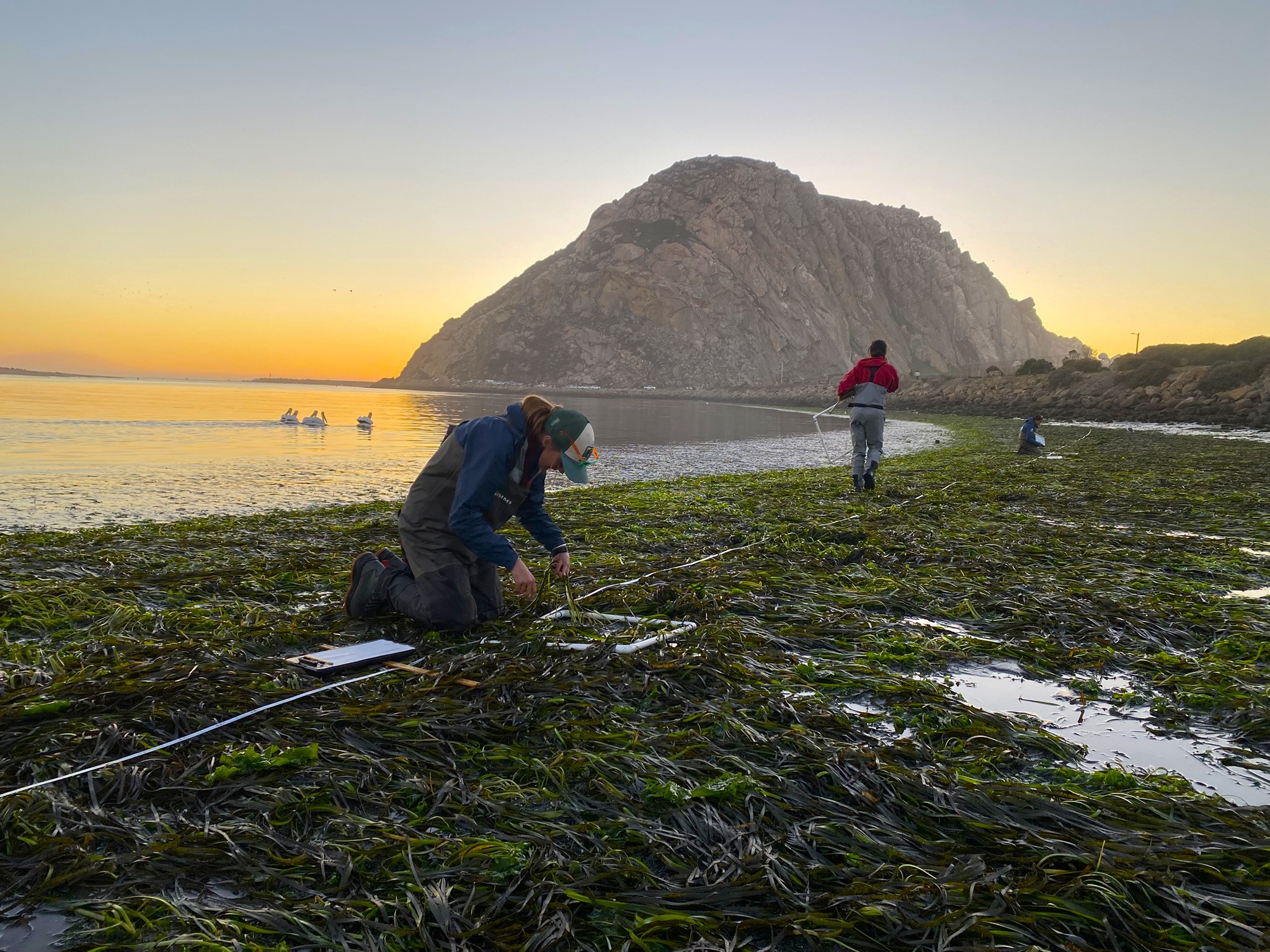
The Estuary Program is gearing up for annual November – December eelgrass surveys, which track shoot density at six long-term monitoring sites.
Staying Vigilant Amidst Changing Conditions
Even though this blog focuses on the areas where eelgrass has been lost, we are not currently seeing any signs that warrant raising an alarm. Eelgrass remains abundant throughout the estuary, and Estuary Program staff and partners will be out in the field in the coming months to conduct surveys that will keep us informed of current conditions. Ongoing monitoring will be especially important as we enter what is predicted to be the strongest El Nino season on record. We’ve already set high water temperature records at both the front bay (71.4 °F, October 8) and back bay (74.4 °F, September 11) sensor stations since their deployment eight years ago, and models are predicting extensive storm events in early 2027. This combination could be stressful for eelgrass, but the exact impacts are difficult to predict.
For more information on the spring 2025 mapping effort and the latest eelgrass monitoring results, check out our latest eelgrass report.
References
Binzer, T, Borum, J, Pedersen, O. November 2005. “Flow velocity affects internal oxygen conditions in the seagrass Cymodocea nodosa”. Aquatic Botany. https://doi.org/10.1016/j.aquabot.2005.07.001
Koch, MS, Schopmeyer, SA, Nielsen, OI, Kyhn-Hansen, C, Madden, CJ. November 2007. “Conceptual model of seagrass die-off in Florida Bay: Links to biogeochemical processes”. Journal of Experimental Marine Biology and Ecology. https://doi.org/10.1016/j.jembe.2007.05.031
Maria Greve, T, Borum, J, Pedersen, O. January 2003. “Meristematic oxygen variability in eelgrass (Zostera marina)”. Limnology and Oceanography. https://doi.org/10.4319/lo.2003.48.1.0210
MBNEP. September 2024. “Morro Bay Eelgrass: How did we get here and what does the future hold?”. https://www.mbnep.org/2024/09/06/morro-bay-eelgrass-how-did-we-get-here-and-what-does-the-future-hold/
Swain, Daniel. October 2026. “El Nino, already near/at record intensity, will further strengthen to historic level and likely bring major California & SW U.S. winter impacts”. https://weatherwest.com/archives/44119