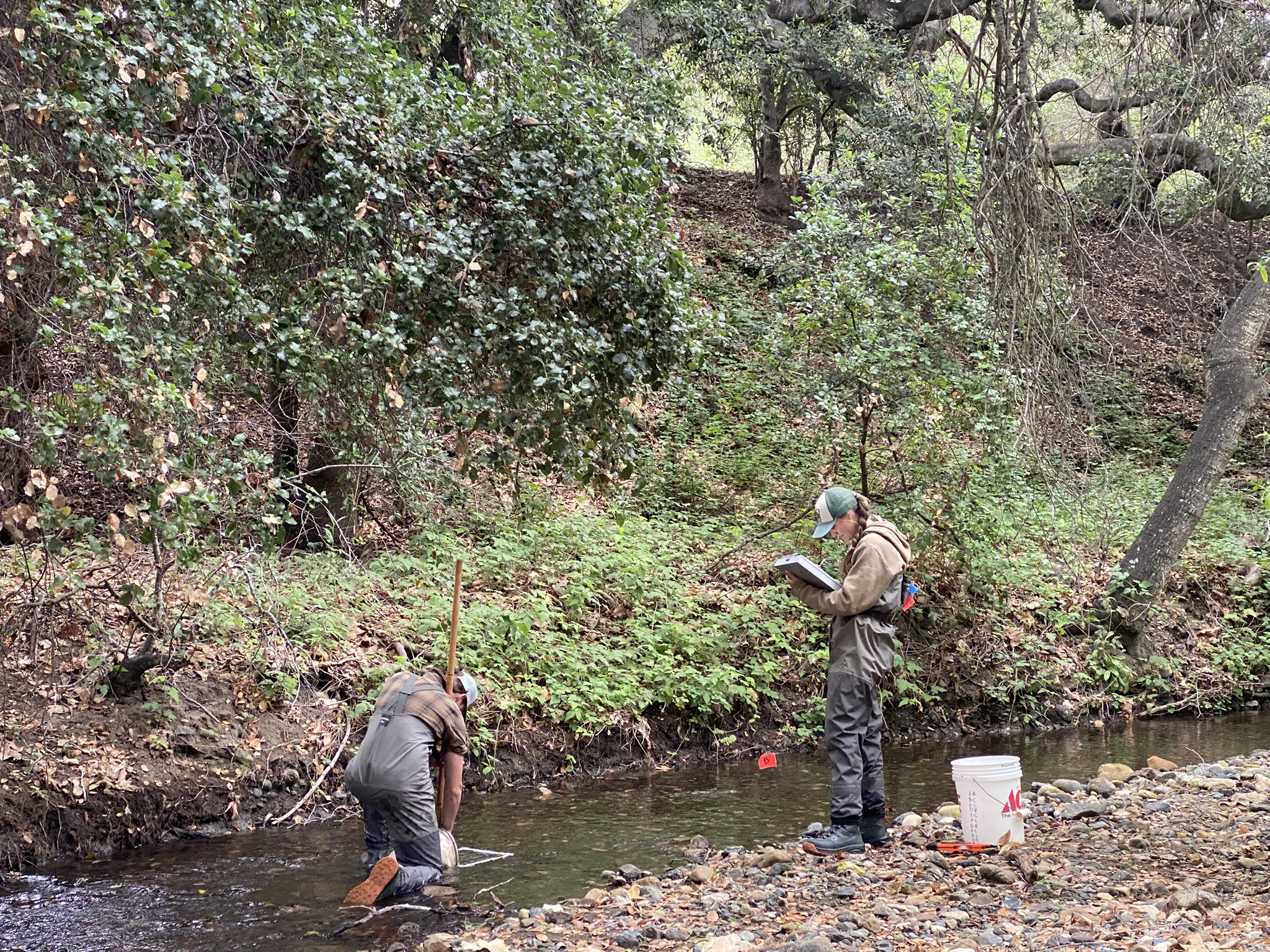
Each spring, the Estuary Program’s monitoring team is hard at work conducting bioassessment surveys. These surveys occur throughout the spring season and involve the collection of over 1,500 measurements at each site. During the survey season, ten sites are assessed to better understand habitat quality, complexity, and suitability for sensitive aquatic species.
These surveys are a highlight for many of our field staff, and we are excited to share some of the best parts with you! To learn more about bioassessment monitoring, keep reading or visit www.mbnep.org/bioassessment.
Bugs Tell a Water Quality Story
Benthic macroinvertebrates are insects that live on the creek floor (“benthic”), are visible to the naked eye (“macro”), and lack a backbone (“invertebrate”). During bioassessment surveys, our team collects benthic macroinvertebrates from each assessment site. The type and quantity of bugs that we find can help us to determine how healthy the creek is, since some species are sensitive and can only survive in clean water, while other species can survive in moderate or even highly polluted waters. Many benthic macroinvertebrates are present year-round, but they are most prevalent in the spring and summer.
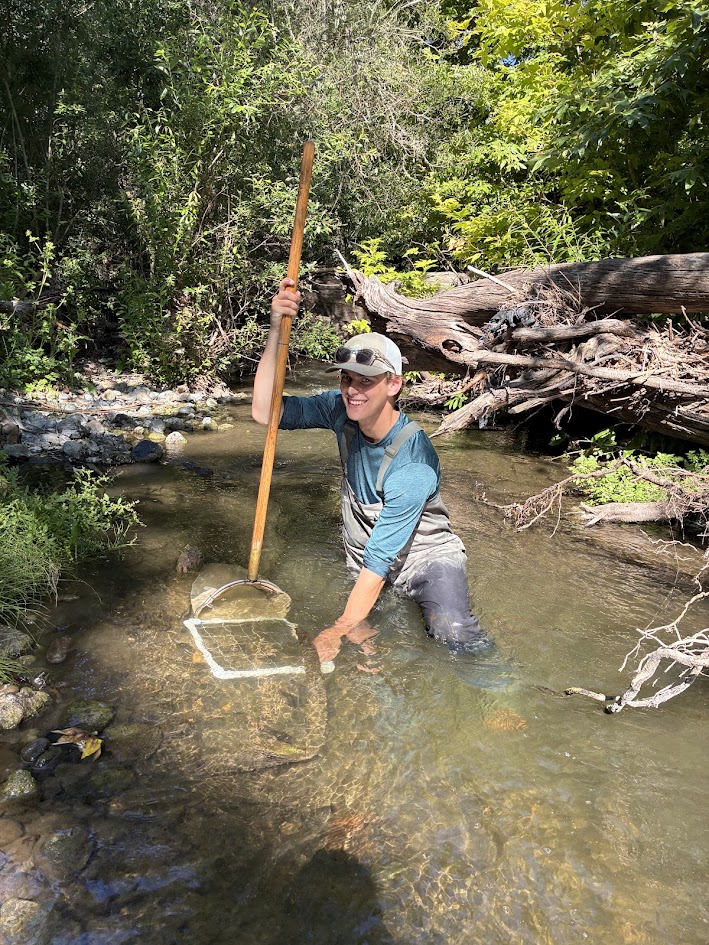
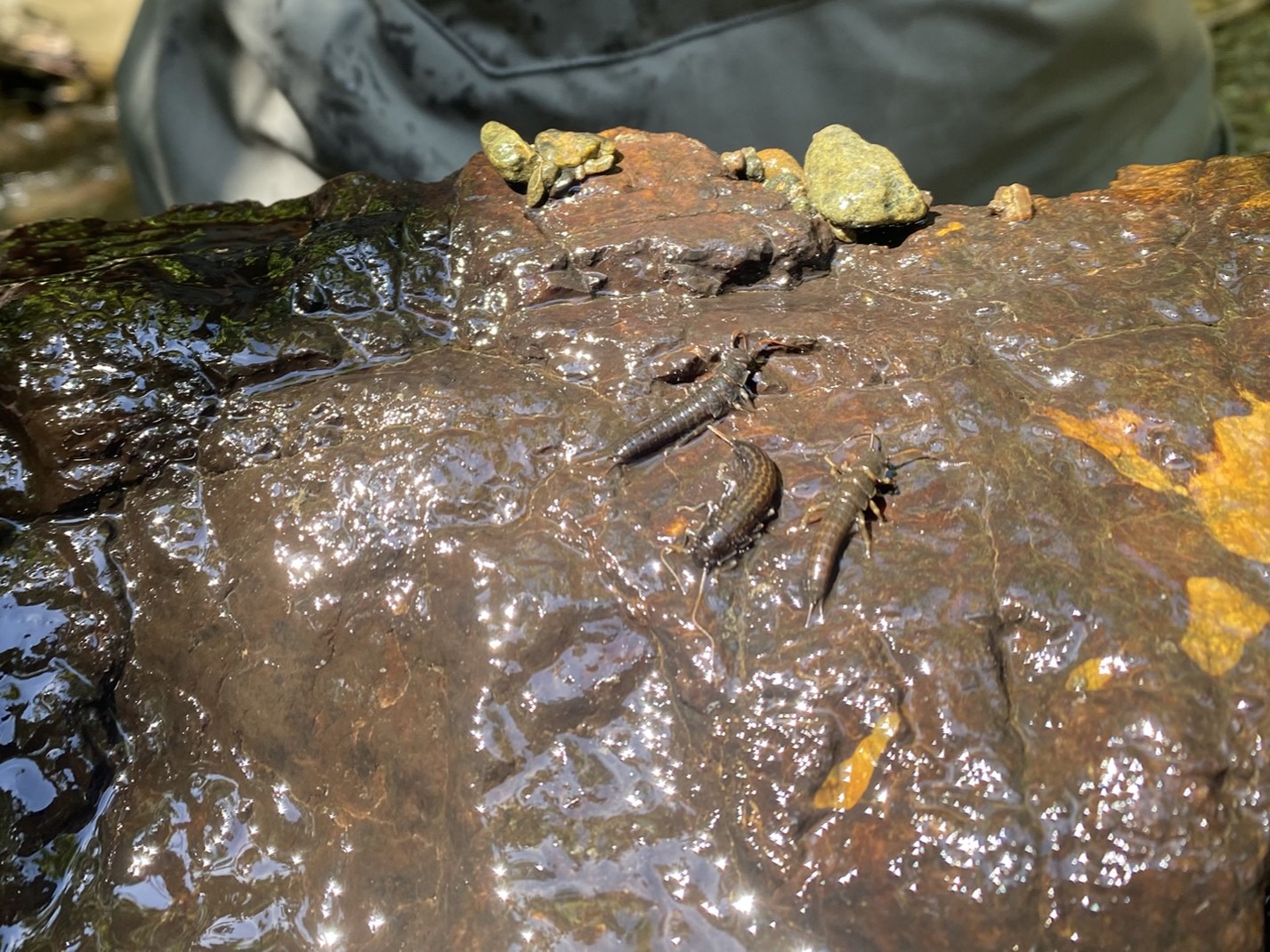
Estuary Program staff collected a wide variety of benthic macroinvertebrates across the ten sites this year. In the cleaner, cooler tributaries, we found a high density of mayflies, caddisflies, and stoneflies. Creeks that are prevalent with these three orders of macroinvertebrates typically have a healthy overall aquatic ecosystem with well-oxygenated water. Our team also found several dragonfly nymphs, which are an indicator of good water quality.
The mainstem of Chorro Creek has slightly warmer water temperatures and typically more fine sediment than its tributaries. Here, we noticed more gilled snails and non-biting midge larvae present. These species are more tolerant of pollution but on their own do not indicate excessively poor water quality.
Wildlife Sightings
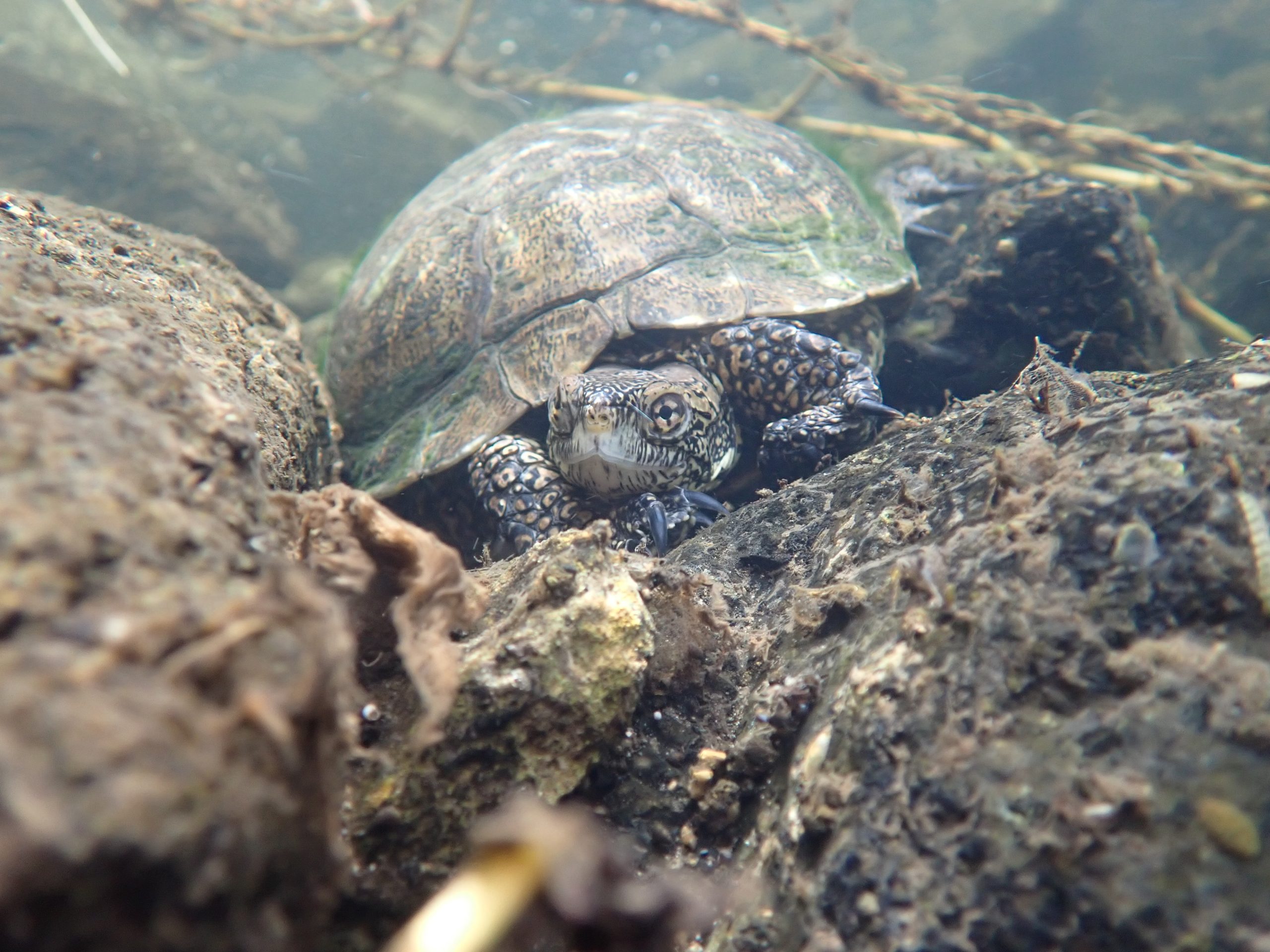
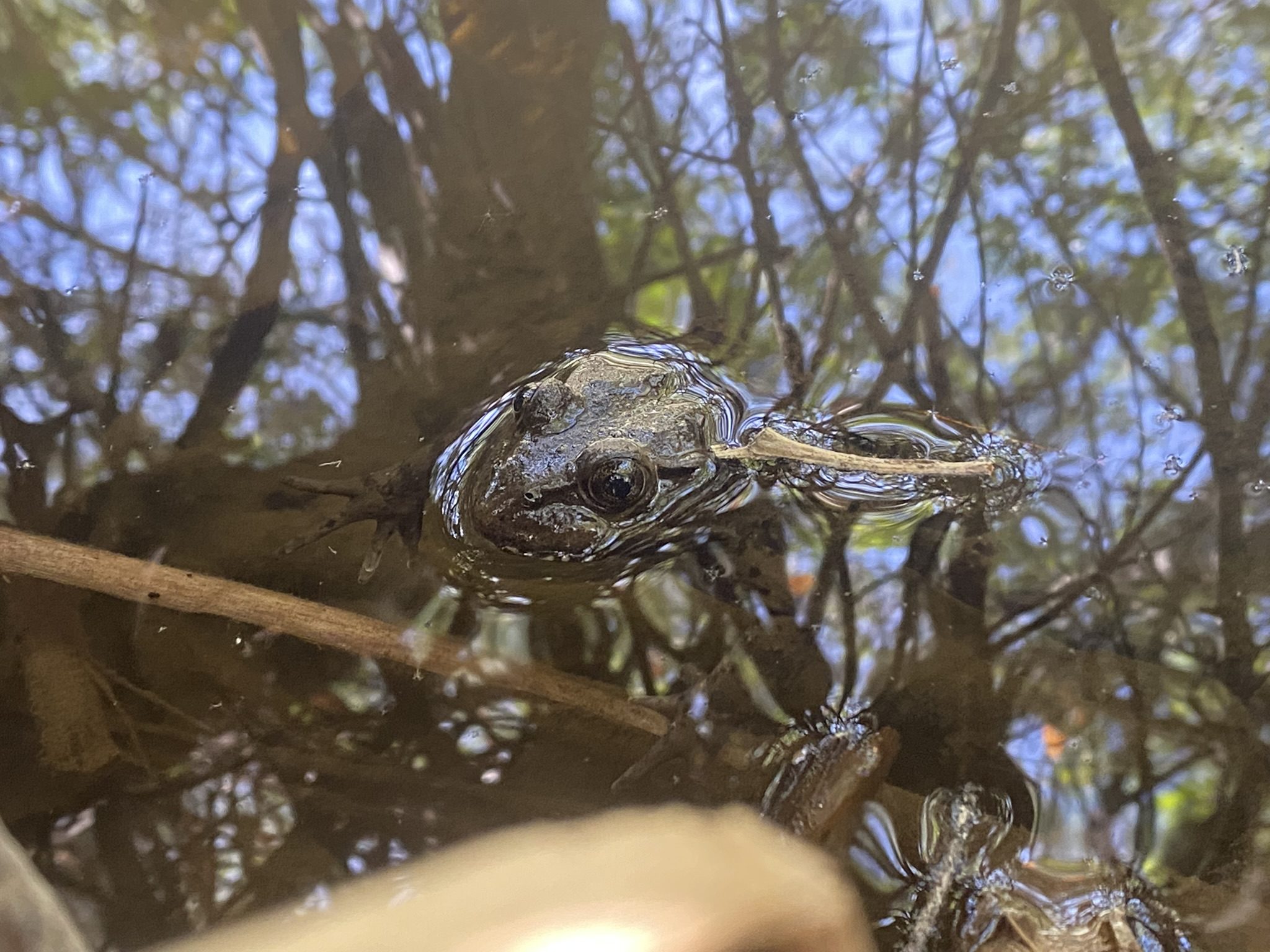
The Morro Bay watershed provides critical refuge habitat for a number of sensitive aquatic species. Among these species are steelhead and rainbow trout (Oncorhynchus mykiss), California red-legged frog (Rana draytonii), and the southwestern pond turtle (Actinemys pallida). This year, our staff observed all three species utilizing the habitats of Chorro Creek, San Bernardo Creek, and San Luisito Creek.
While southwestern pond turtles are becoming less common, our staff have had several encounters this year, including a sighting during a bioassessment survey on Upper Chorro Creek. Due to habitat loss and fragmentation, southwestern pond turtles are classified as a species of special concern by the California Department of Fish and Wildlife. Soon, they could be listed as a threatened species under the federal Endangered Species Act.
As in past years, our team was excited to observe an adult California red-legged frog on Middle Chorro Creek. This location appears to be a stronghold for sensitive species like red-legged frogs and steelhead, but it also has warmer waters which are preferred by the invasive Sacramento pikeminnow. This is a key area for future pikeminnow suppression efforts, since pikeminnow are known to predate on juvenile red-legged frogs and steelhead, jeopardizing their success.
What’s Next?
With bioassessment field efforts wrapped up, our next step is data entry and analysis. We look forward to sharing the results soon! To stay in the know, be sure to subscribe to our blog. You can also follow us on Instagram at @morrobayNEP and on Facebook at www.facebook.com/MBestuary.
Recognizing the Harold J. Miossi Trust
With the generous support of the Harold J. Miossi Charitable since 2013, the Estuary Program has been able to conduct our bioassessment monitoring in the Morro Bay watershed. The Trust has contributed more than $169,000 to this important work, supporting our efforts to build a valuable dataset to track watershed health over time. This information helps us to prioritize our conservation and restoration efforts. To learn more about the Miossi Charitable Trust, please visit https://www.miossicharitabletrust.org/.
Help us protect and restore the Morro Bay estuary!
- Donate to the Estuary Program today and support our work in the field, the lab, and beyond.
The Estuary Program is a 501(c)3 nonprofit. We depend on funding from grants and generous donors to continue our work. - Support us by purchasing estuary-themed gear from ESTERO. This locally owned and operated company donates 20% of proceeds from its Estuary clothing line and 100% of Estuary decal proceeds to the Estuary Program. Thank you, ESTERO!
- Subscribe to our seasonal newsletter: Between the Tides!
- We want to hear from you! Please take a few minutes to fill out this short survey about what type of events you’d like to see from the Estuary Program. We appreciate your input!