How to Enjoy Fishing Sustainably
Fishing can be a great way to spend time outdoors, connect with nature, and see wildlife up close. As with any outdoor hobby, it’s important to recreate sustainably. Continue reading to learn about the many ways to enjoy fishing in an environmentally sustainable and eco-friendly manner.
Manage Your Waste
Fishing tackle such as nets, lines, and buoys are a major source of marine pollution. Fishing gear can represent up to 100% of the marine debris found in some areas of the world (source). This “ghost gear” can cause environmental harm by entangling animals or seeping toxic chemicals.
Much of this waste comes from commercial fishing operations, but small-scale fishing can have an impact as well. In order to minimize lost or broken gear, try to use strong, high-quality lines and nets. Be sure to dispose of your gear responsibly once it becomes frayed or worn. The California State Parks Department of Boating and Waterways and Boat U.S. Foundation both have maps of fishing line recycling networks. If you dispose of tackle in a regular trash can, first cut lines and nets into small pieces to minimize the chance of entanglement.
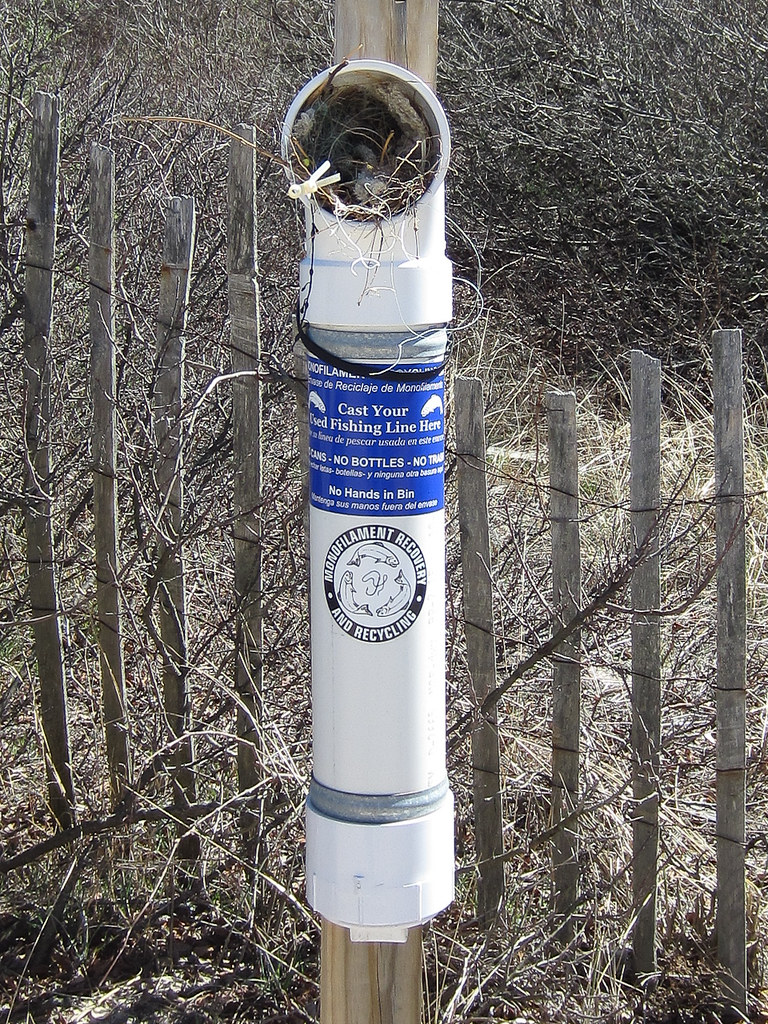
Fishing line disposal units such as this one help minimize the risk of animal entanglement. “Fishing line receptacle” by Kim Brookes, CC BY-NC-ND 2.0
Some anglers may try to reduce pollution by using tackle made from “biodegradable” plastics. However, conditions in the wild are not always ideal for complete biodegradation, which means that these plastics may degrade only partially. This turns them into microplastics that are difficult to remove from the environment. Learn more in this blog post about plastics.
Lead Pollution
Lead fishing weights are also a source of fishing industry pollution. They can poison animals and leach lead into water and soil. Lead from weights can even rub off on hands and cause harm to humans.
The CA Department of Toxic Substances Control estimates that there are up to 18,600 metric tons of lead fishing weights in California freshwater sediments. When stocking your tackle box, consider weights made from tin, steel, or ceramic. If you find lead weights, reach out to your local household hazardous waste facility for safe disposal information.
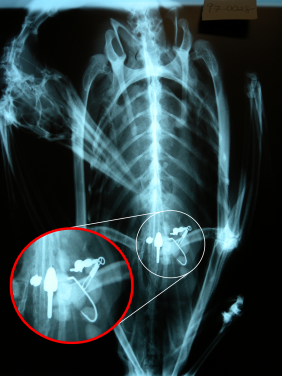
This x-ray of a dead loon shows that it ingested fishing tackle, including lead weights. Photo courtesy of Minnesota Pollution Control Agency.
Responsible Fish Cleaning and Disposal
Once you’ve caught your fish, you may want to gut and clean them before heading home. Many harbors and marinas have fish cleaning stations. Follow all posted instructions, such as disposing of waste in a covered trash can. Do not allow birds or wildlife to eat fish waste, as they can be damaged by bones or lost hooks. If there is no cleaning station nearby, bag your fish waste and dispose of it in a trash can with a tight-fitting lid.
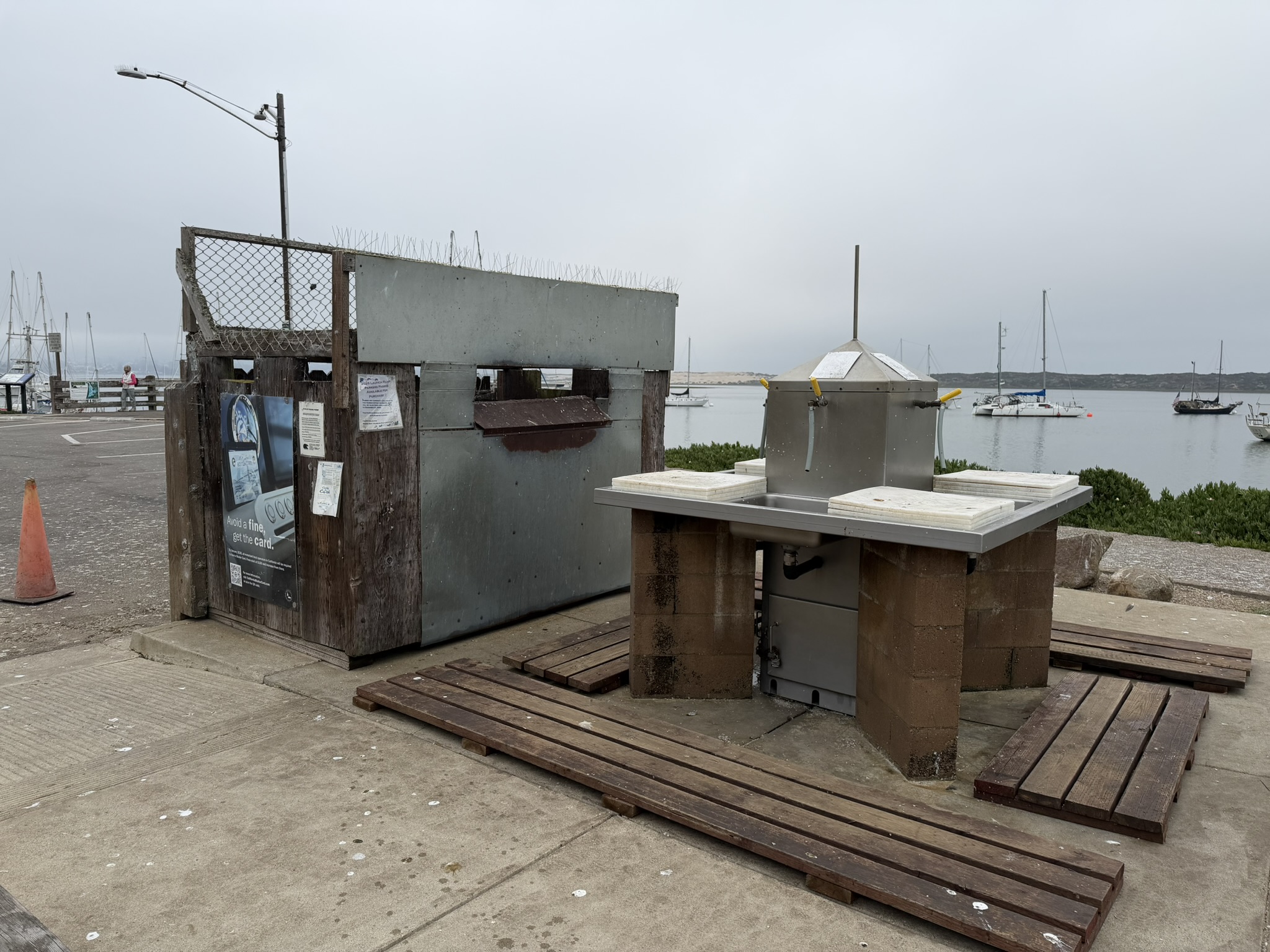
Fish cleaning stations, such as this one at Tidelands Park in Morro Bay, provide a space for anglers to clean their catch and dispose of fish waste responsibly.
Respect Laws and Limits
Another way to be a sustainable angler is by respecting catch limits and species restrictions. Check out information from local regulatory agencies to learn more. If you’re in Morro Bay, the City Harbor Patrol has a website with information about local fishing regulations.
Many coastal waterways are designated as Marine Protected Areas (MPAs). MPAs are marine or estuarine areas established to protect marine life and habitat (source). There are three types of MPAs in California, each of which have different limits on “extractive” activities such as fishing.
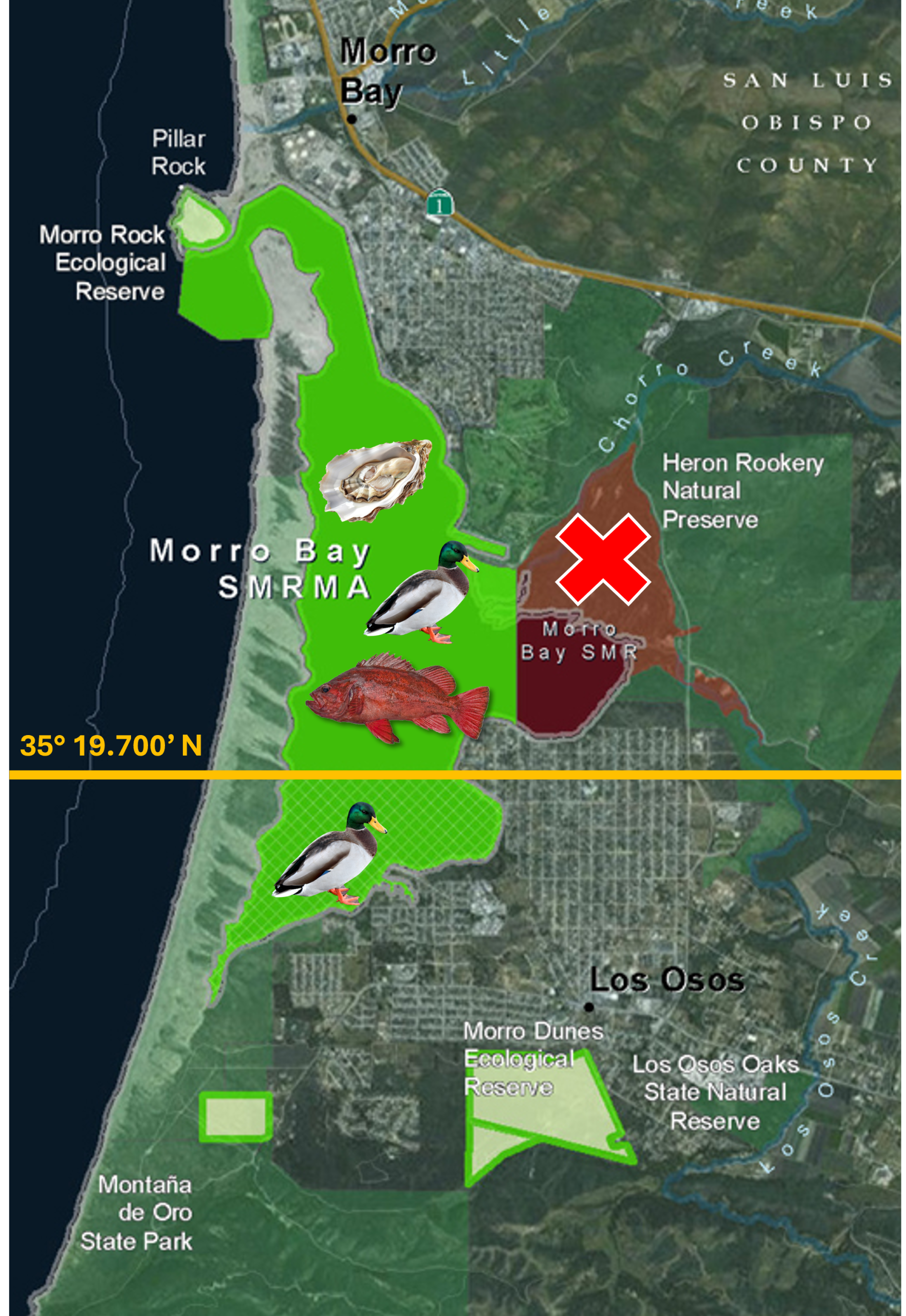
This image shows the different types of MPAs within the Morro Bay estuary. In the SMR (red area), all take is prohibited. In the SMRMA (cross-hatched green areas below the yellow line), waterfowl hunting is allowed. In the upper part of the SMRMA (plain green area), recreational take of finfish, commercial oyster aquaculture, and storing finfish taken outside of the SMRMA for bait purposes is allowed. Courtesy of the CA Department of Fish and Wildlife.
The Morro Bay estuary is a Marine Protected Area. The eastern end of the estuary is a State Marine Reserve (SMR). Per the CDFW, “it is unlawful to injure, damage, take, or possess any living, geological, or cultural marine resource” in this area. The rest of the estuary is a State Marine Recreational Management Area (SMRMA). This area has the same restrictions as the SMR, except that take of waterfowl in accordance with general waterfowl regulations is allowed. In addition, in the area north of latitude 35° 19.700’ N, recreational take of finfish, commercial oyster aquaculture, and storing finfish taken outside of the SMRMA for bait purposes is allowed.
Responsible Catch and Release
Catch and release can be a good practice if you want to go fishing but don’t want to bring fish home. You should also catch and release if you’ve landed a fish that is out of season, undersized, or otherwise prohibited to take. There are important considerations and best practices to follow when engaging in catch and release fishing.
Consider using barbless or circle hooks instead of barbed hooks. These can minimize the damage to fish and increase their chances of survival after release. You can also use non-stainless steel hooks, which will corrode and fall out if they get stuck in a fish’s mouth.
Avoid exhausting fish when reeling them in, as tired fish are less likely to survive when released. Try to keep fish in the water as much as possible when unhooking it. If you must remove it from the water, try to handle it with wet hands and avoid touching their eyes or gills. You can also use a landing net to minimize touching. Allow the fish to rest in a bucket of water before releasing it.
Fish caught deeper than 30 feet may experience barotrauma as a result of the change in pressure. If this occurs, consider using tools such as descending devices to return fish to depth quickly and with minimal damage.
Other Ways to Help
You can help to support healthy fish populations even if you’re not an angler. If you have a boat, be sure to clean, drain, and dry it between uses. Local fish populations can be negatively impacted by invasive species transferred from the hull or bilge of your boat. Learn more about sustainable boating tips in this blog post.
You can also help fish populations by making informed decisions about seafood consumption. The Monterey Bay Aquarium runs a program called Seafood Watch, which helps educate the public about sustainable seafood options.
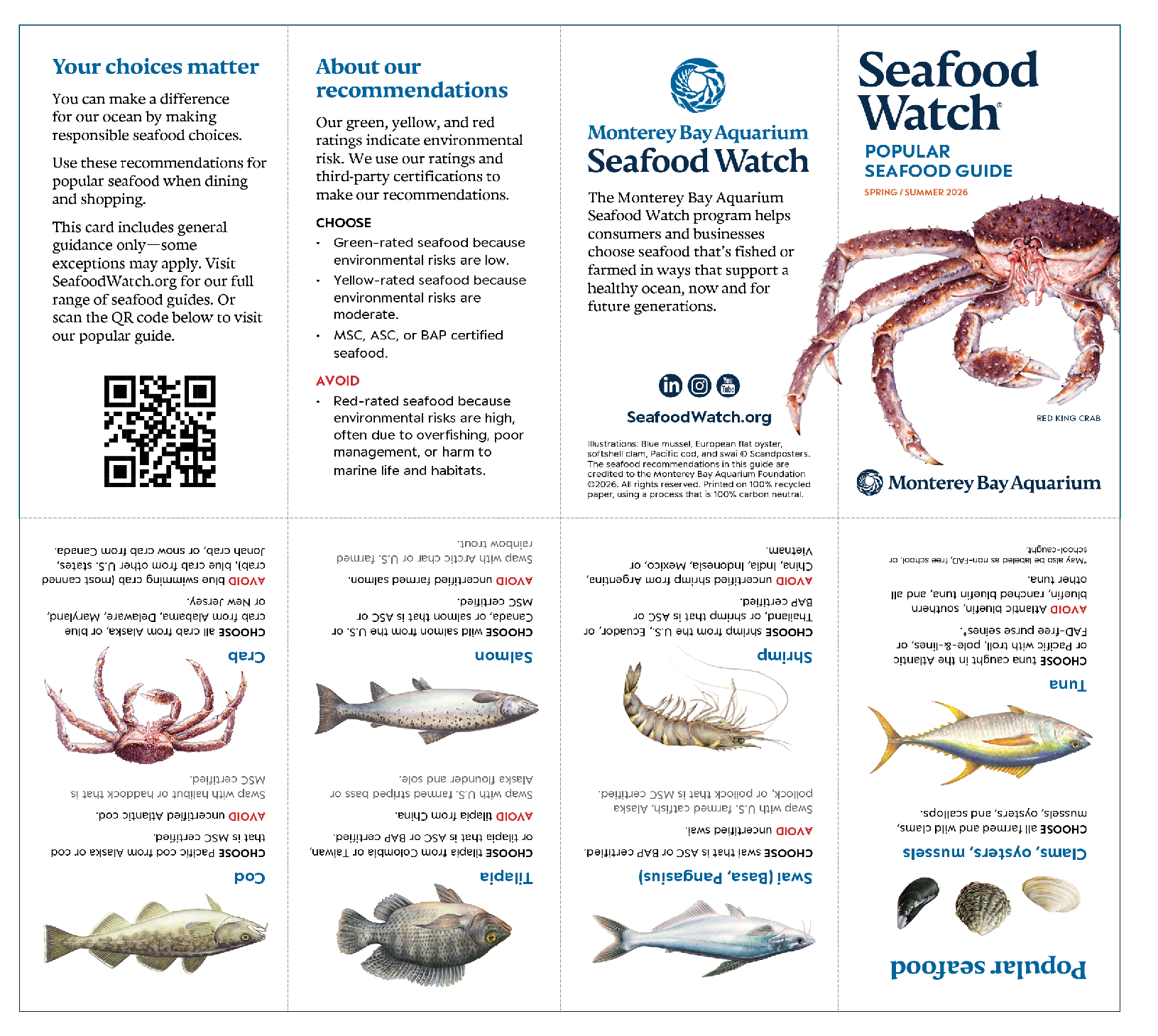
The Monterey Bay Aquarium Seafood Watch program has a graphic that you can print, fold, and keep in your wallet as a handy reference for sustainable seafood choices.
No matter how you interact with fish, whether it’s in the water or on your plate, you can help make a positive difference for fish populations through sustainable choices.
Resources
https://www.takemefishing.org/how-to-fish/fishing-gear-and-tackle/sustainable-fishing-gear/
https://joinrfa.org/conservation/sustainable-fishing/eco-friendly-fishing-tips/
https://joinrfa.org/conservation/sustainable-fishing/
https://dtsc.ca.gov/wp-content/uploads/sites/31/2025/11/Lead-Weight-Factsheet_Final_Accessible.pdf
https://www.fisheries.noaa.gov/national/resources-fishing/catch-and-release-fishing-best-practices
https://www.waterboards.ca.gov/water_issues/programs/nps/encyclopedia/4_2a_sold_fshwst_mgmt.html
https://www.sciencedirect.com/science/article/pii/S2589014X25004748#s0105