Spring marks the busy season for the Estuary Program’s field staff. Our monitoring team tackles bioassessment surveys, expanded streamflow monitoring, and eelgrass assessments, all on top of routine efforts like water quality monitoring, sonde deployments, and more. Even though our schedules are packed, this time of year is always welcomed as our staff are excited to get outside and see how conditions are changing.
Keep reading to learn more about what we’ve been up to in the field during this busy season.
Bioassessment Season Begins!
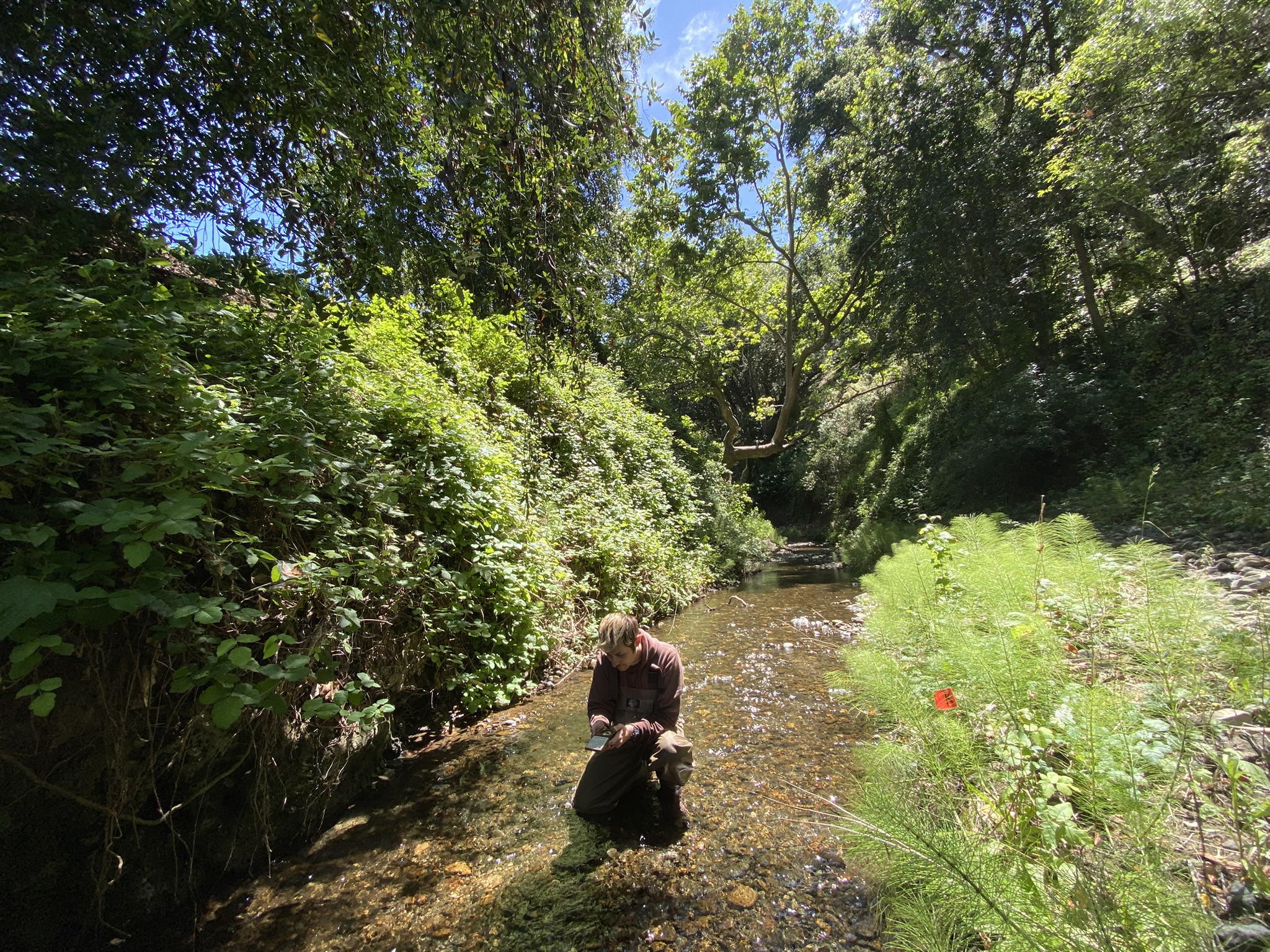
Each spring, the Estuary Program conducts freshwater bioassessment monitoring throughout the Morro Bay watershed. Surveys involve taking numerous creek measurements and collecting benthic macroinvertebrates at ten unique locations. To read more about bioassessment monitoring, please visit www.mbnep.org/bioassessment.
The survey season kicked off with a training led by seasoned monitoring program staff. The training brought together junior staff from the Estuary Program, staff from the Central Coast Ambient Monitoring Program (CCAMP), Watershed Stewards Program (WSP) Corpsmembers, and volunteers from the CA Conservation Corps (CCC). Attendees received hands-on training on topics including macroinvertebrate collection, channel dimension measurements, slope assessments, and more.
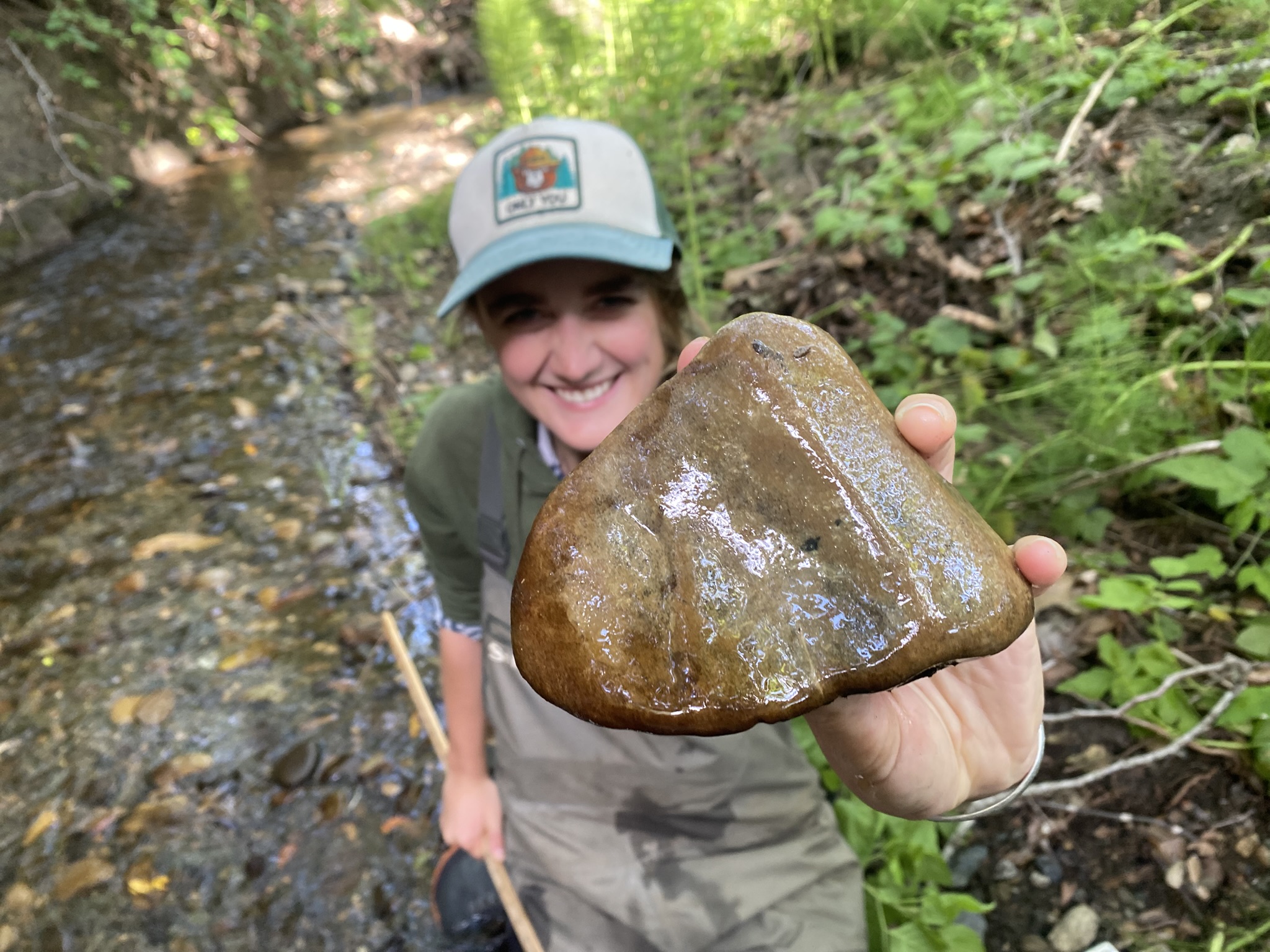
Several days after the training, our team embarked on the first bioassessment survey of the year at upper Dairy Creek, near El Chorro Regional Park. While this stretch of creek often goes dry in the summer months, it can support a healthy diversity of aquatic benthic macroinvertebrates in the spring. Our team observed a number of macroinvertebrates during sampling including mayflies, caddisflies, and stoneflies. These three orders of insects typically indicate good water quality conditions.
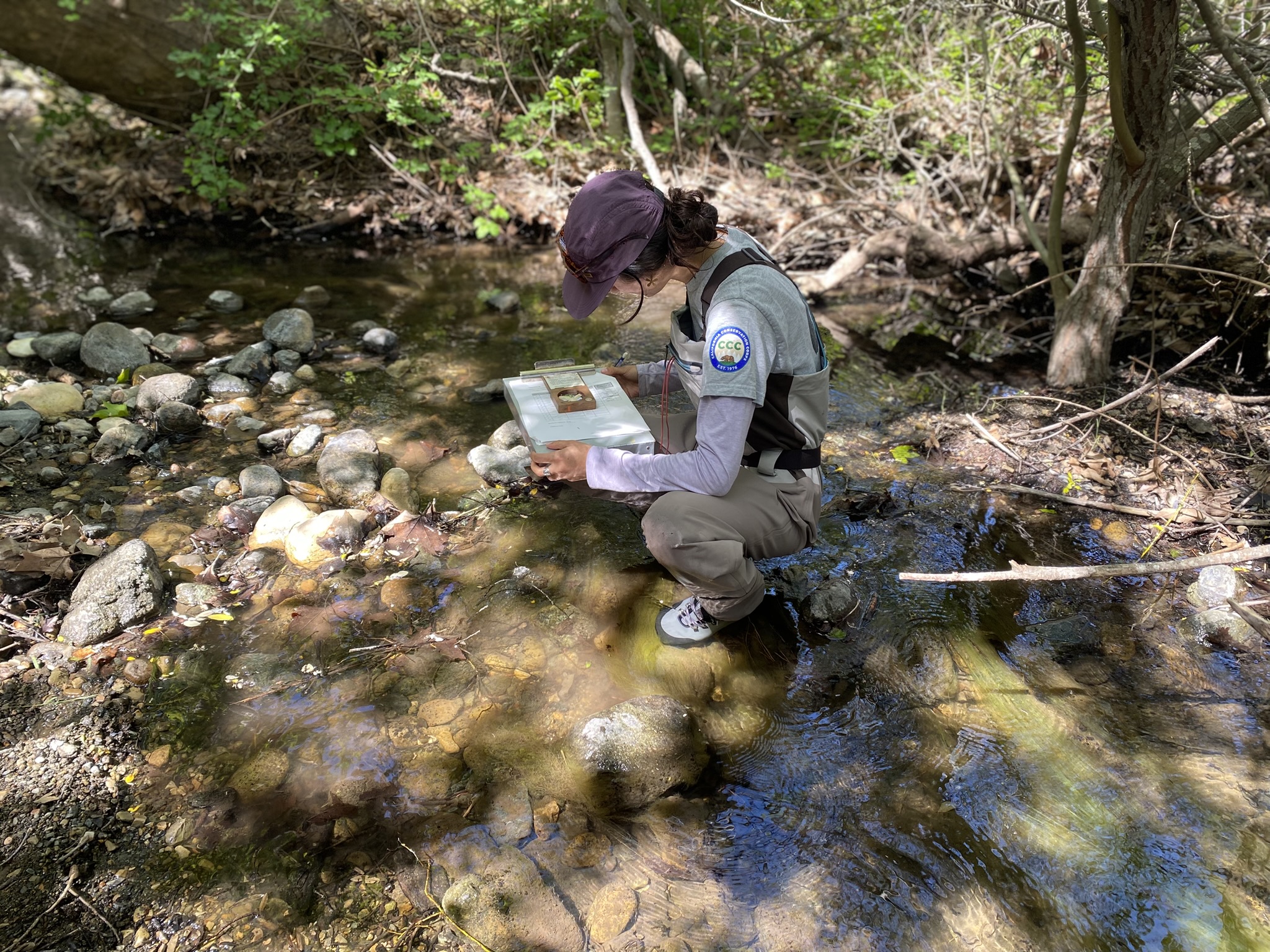
The Estuary Program’s monitoring team will conduct ten bioassessment surveys throughout the field season. Our team will assess habitat conditions on Chorro Creek, Pennington Creek, Dairy Creek, San Bernardo Creek, San Luisito Creek, and Upper Los Osos Creek. We look forward to sharing highlights from our field season soon!
Spring Low Flow Monitoring
Spring is a critical time of year for sensitive aquatic species like resident rainbow trout and steelhead. Because these fish typically spawn between February and April, the success of their offspring relies on the presence of cool, clean, flowing water.
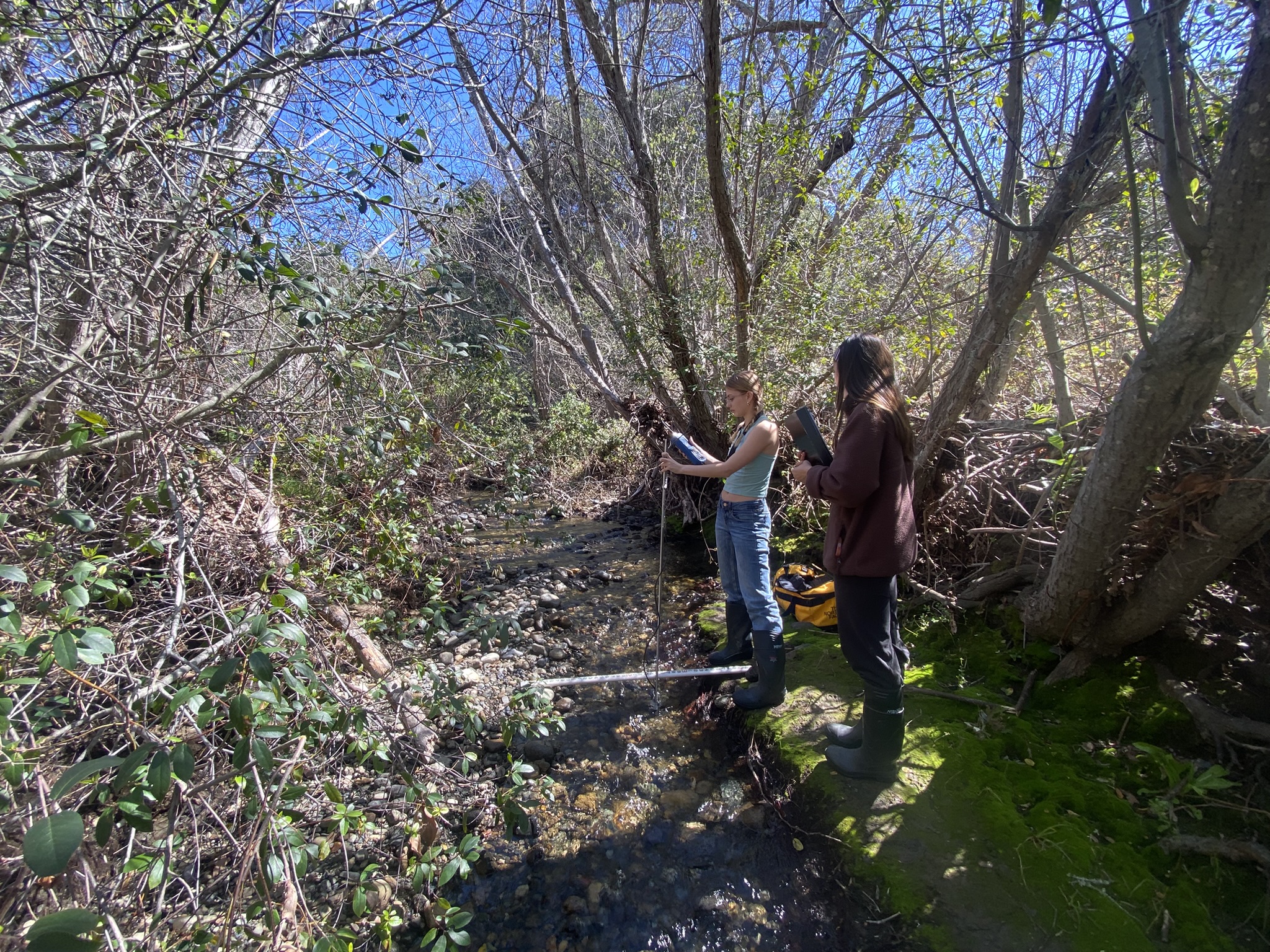
The Estuary Program and its volunteers conduct focused streamflow measurements every other week during the spring and summer to better understand if local creeks have enough water to meet the ecological needs of steelhead and other sensitive species. Data collected through this expanded monitoring effort will be used to develop target streamflow criteria for each monitoring site. We are several years into this monitoring effort and are expecting to develop our targets soon.
To learn more about our low flow monitoring efforts, check out this blog from 2022: https://www.mbnep.org/2022/10/07/field-updates-september-2022-low-flow-monitoring/.
Gearing Up for Low Tides
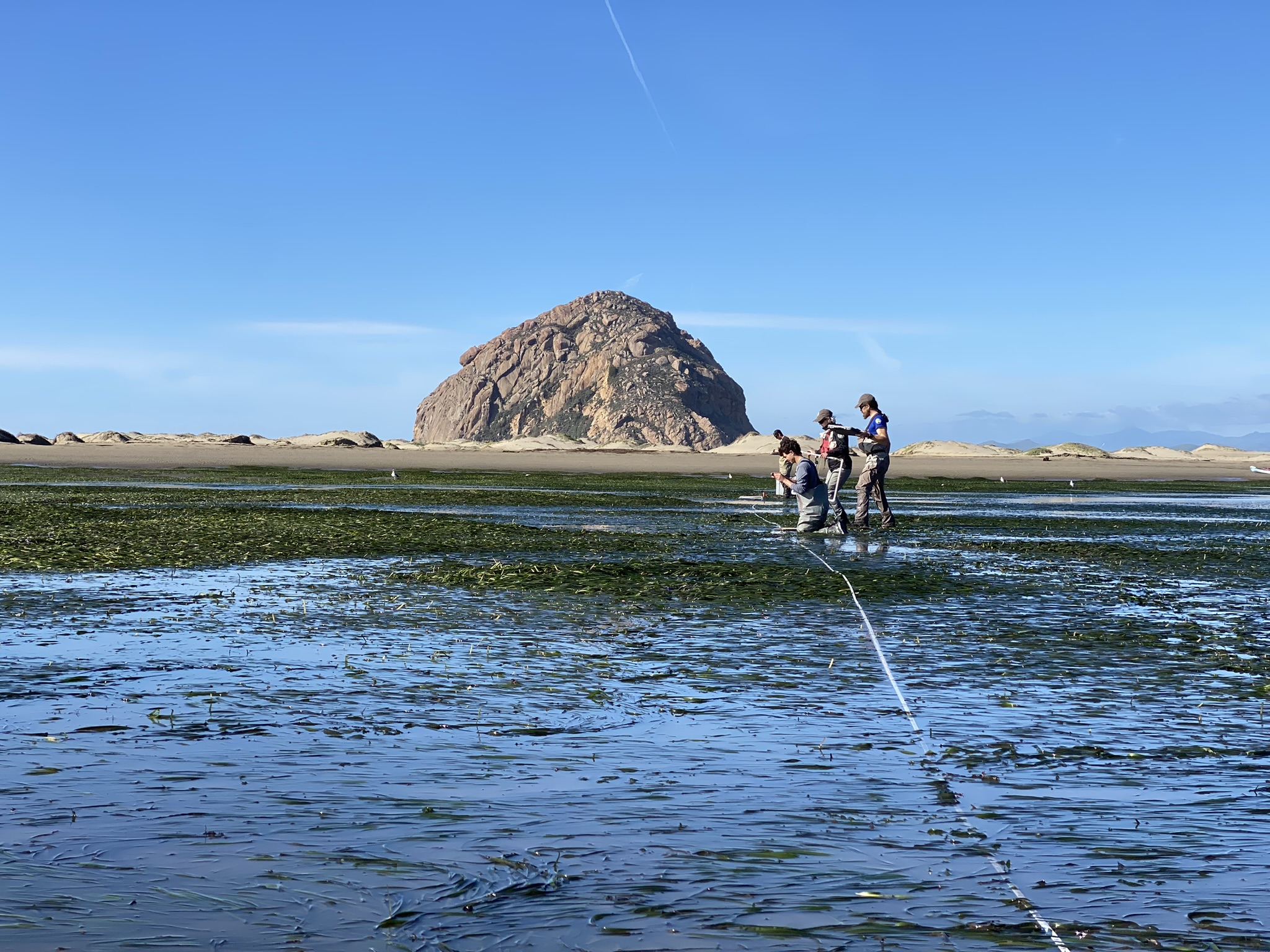
In the spring, Morro Bay experiences some of the lowest tides of the year due to the Earth’s position relative to the Sun and Moon. This positioning results in a unique gravitational pull that causes very high tides coupled with very low tides. Estuary Program staff take advantage of the lowest tides to monitor eelgrass, a flowering plant that grows in the intertidal zone of Morro Bay.
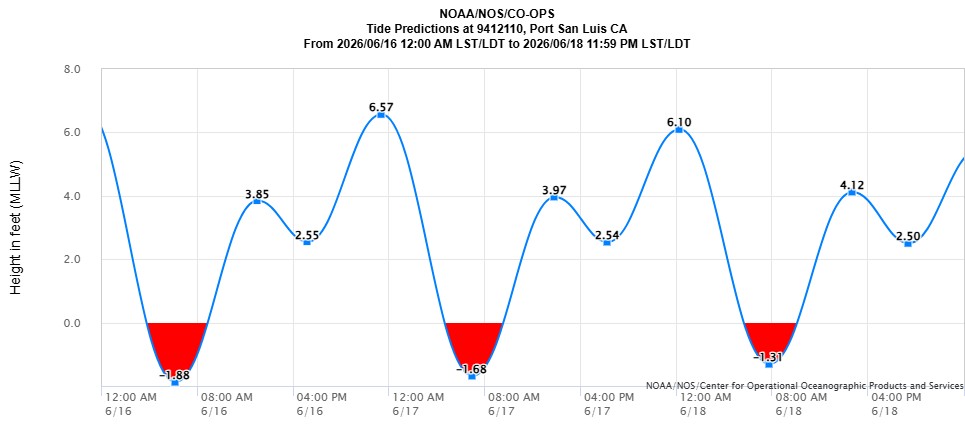
This month, Estuary Program staff and WSP Corpsmembers will head out to several locations throughout Morro Bay to monitor eelgrass health. Our team will assess eelgrass density, algal cover, number of flowering shoots, and presence of any plant or animals living on the eelgrass blades (also called “epiphytes” or “epifauna”). Additionally, we will collect blades and analyze them to better understand the presence and severity of eelgrass wasting disease, which is caused by a destructive slime mold called Labyrinthula.
Want to Learn More?
To stay up to date with the Estuary Program’s ongoing monitoring efforts, be sure to subscribe to our blog and our seasonal newsletter. Past versions of our newsletter are available on our website at www.MBNEP.org/newsletter. You can also follow us on Instagram at @morrobayNEP and on Facebook at www.facebook.com/MBestuary.
Help us protect and restore the Morro Bay estuary!
- Donate to the Estuary Program today and support our work in the field, the lab, and beyond.
The Estuary Program is a 501(c)3 nonprofit. We depend on funding from grants and generous donors to continue our work. - Support us by purchasing estuary-themed gear from ESTERO. This locally owned and operated company donates 20% of proceeds from its Estuary clothing line and 100% of Estuary decal proceeds to the Estuary Program. Thank you, ESTERO!
- Purchase items from the Estuary Program’s store on Zazzle. Zazzle prints and ships your items, and the Estuary Program receives 10% of the proceeds.
- Subscribe to our seasonal newsletter: Between the Tides!
- We want to hear from you! Please take a few minutes to fill out this short survey about what type of events you’d like to see from the Estuary Program. We appreciate your input!